Securing Remote Workforces: Reduce Digital Risks by 25% in 6 Months
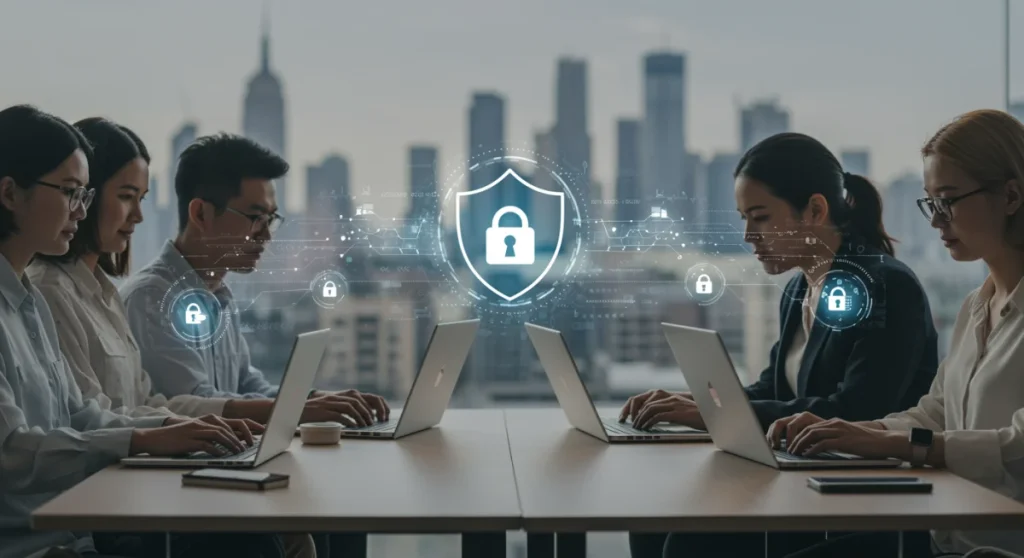
US businesses can significantly enhance their cybersecurity posture for remote workforces, aiming to reduce digital risks by 25% within six months through a combination of robust policies, advanced technologies, and employee training.
Securing Remote Workforces: A Guide for US Businesses to Reduce Digital Risks by 25% within 6 Months is no longer just a recommendation; it’s a critical imperative for maintaining operational integrity and competitive advantage in today’s digital landscape. As remote work becomes a foundational element of many US business models, the attack surface for cyber threats expands dramatically. This guide offers actionable strategies to fortify your defenses.
Understanding the Evolving Threat Landscape for Remote Work
The shift to remote work has undeniably brought flexibility and efficiency, but it has also introduced a complex array of cybersecurity challenges. Traditional perimeter-based security models are no longer sufficient when employees access sensitive data from various locations and devices. Businesses must now contend with a decentralized environment where every home network and personal device can potentially become a vulnerability.
Cybercriminals are acutely aware of these expanded attack vectors. Phishing attempts targeting remote workers have surged, exploiting the blurred lines between personal and professional computing. Malware, ransomware, and insider threats also pose significant risks, often exacerbated by less secure home Wi-Fi networks and a lack of consistent security protocols outside the corporate firewall. Understanding these evolving threats is the first step toward building a resilient defense.
The Rise of Targeted Attacks
Remote workers are frequently targeted with highly sophisticated phishing and social engineering schemes. These attacks often impersonate IT support, HR, or senior management to trick employees into revealing credentials or installing malicious software. The personal context of a home environment can sometimes make these attacks even more convincing.
- Phishing emails designed to steal login credentials.
- Social engineering tactics exploiting trust and urgency.
- Malware distributed through seemingly legitimate software updates.
Furthermore, the increased reliance on cloud-based applications and services, while beneficial for collaboration, also introduces new points of entry for attackers if not properly secured. Misconfigurations in cloud environments are a common vulnerability that can lead to significant data breaches. Addressing these issues requires a comprehensive and adaptive security strategy.
Implementing Robust Endpoint Security Measures
Endpoint security is the cornerstone of protecting a distributed workforce. Every laptop, tablet, and smartphone used for business purposes represents an endpoint that requires stringent protection. Without proper controls, these devices can become conduits for data breaches and network intrusions, especially when operating outside the controlled environment of a corporate office.
Effective endpoint security goes beyond basic antivirus software. It involves a multi-layered approach that includes advanced threat detection, proactive vulnerability management, and strict access controls. US businesses must prioritize securing these individual devices to prevent unauthorized access and data exfiltration, directly contributing to the 25% risk reduction goal.
Essential Endpoint Protection Strategies
To truly secure endpoints, organizations should look beyond traditional antivirus. Endpoint Detection and Response (EDR) solutions offer real-time monitoring and automated response capabilities, allowing security teams to quickly identify and neutralize threats. This proactive stance is crucial in a remote setting where immediate intervention can prevent widespread damage.
- Deploying next-generation antivirus (NGAV) with behavioral analysis.
- Implementing EDR solutions for continuous monitoring and rapid response.
- Enforcing strong password policies and multi-factor authentication (MFA) on all devices.
- Regularly patching and updating operating systems and applications.
Device encryption is another non-negotiable measure. In the event of a lost or stolen device, encryption ensures that sensitive data remains inaccessible to unauthorized individuals. Combined with remote wipe capabilities, this significantly mitigates the risk of data compromise from physical security incidents. A robust endpoint strategy forms the bedrock of a secure remote operation.
Strengthening Network Security for Remote Access
While endpoint security focuses on individual devices, network security for remote access ensures that the connections between remote workers and corporate resources are secure. Virtual Private Networks (VPNs) have long been the standard for encrypting traffic, but modern threats demand more sophisticated approaches, such as Zero Trust Network Access (ZTNA).
A secure network infrastructure for remote access is paramount to preventing eavesdropping, data interception, and unauthorized entry into internal systems. Businesses must evaluate their current remote access solutions and upgrade them to meet the demands of a highly distributed workforce, ensuring a seamless yet secure experience for employees.
Beyond Traditional VPNs
While VPNs provide an encrypted tunnel, they often grant broad network access once authenticated. ZTNA, on the other hand, operates on the principle of ‘never trust, always verify.’ It provides granular, application-specific access based on user identity, device posture, and other contextual factors. This significantly reduces the attack surface compared to traditional VPNs.
- Implementing Zero Trust Network Access (ZTNA) for granular access control.
- Ensuring all remote connections utilize strong encryption protocols.
- Segmenting networks to limit lateral movement in case of a breach.
Regular audits of network configurations and access logs are also essential. These audits help identify unusual activity, misconfigurations, and potential vulnerabilities before they can be exploited. By continuously monitoring and adapting network security measures, businesses can maintain a high level of protection for their remote operations.
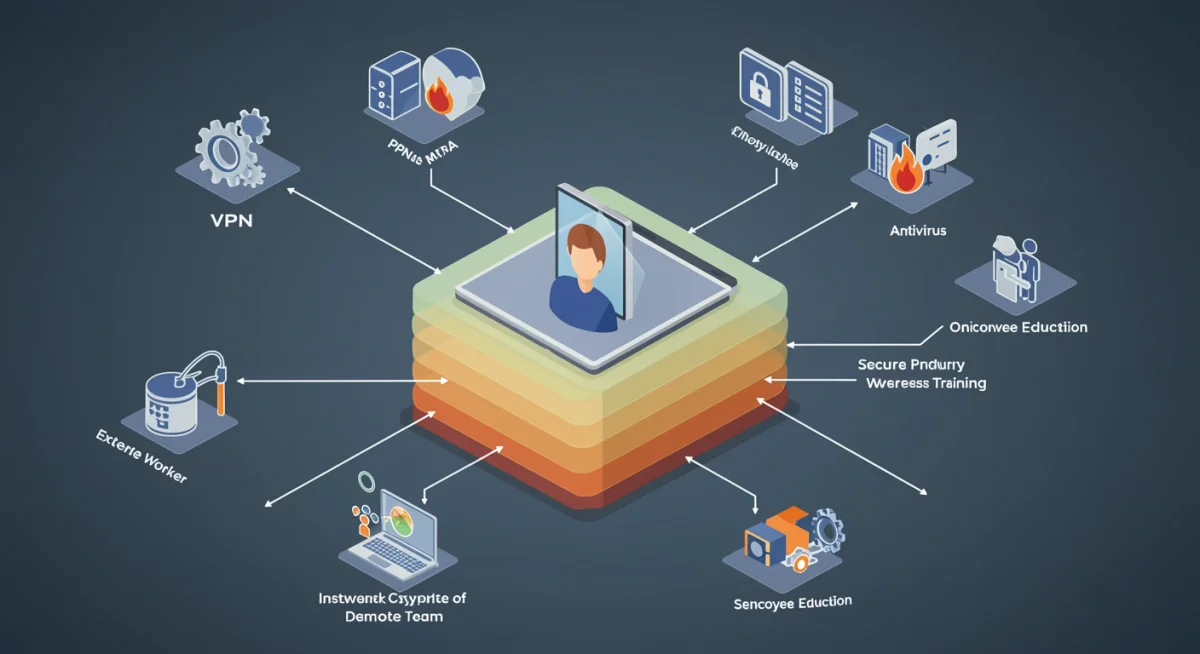
Enhancing Identity and Access Management (IAM)
Identity and Access Management (IAM) is critical for managing who has access to what resources within an organization. For remote workforces, IAM becomes even more vital, as it helps control access to cloud applications, internal systems, and sensitive data from various locations and devices. Without strong IAM, the risk of unauthorized access and privilege escalation increases significantly.
Implementing robust IAM policies and technologies ensures that only authorized individuals can access specific resources, based on their roles and responsibilities. This principle of least privilege minimizes the potential impact of compromised credentials, making it a cornerstone of reducing digital risks by the target 25% within the six-month timeframe.
Key IAM Components for Remote Teams
Multi-factor authentication (MFA) is arguably the most impactful IAM control. By requiring more than just a password, MFA significantly reduces the risk of credential theft. Single Sign-On (SSO) solutions improve both security and user experience by centralizing authentication for multiple applications.
- Mandating Multi-Factor Authentication (MFA) for all corporate accounts.
- Implementing Single Sign-On (SSO) to streamline access and enhance security.
- Regularly reviewing and revoking access privileges for departing employees.
- Utilizing role-based access control (RBAC) to enforce the principle of least privilege.
Beyond technical controls, establishing clear policies for password hygiene and account management is crucial. Employees should be educated on the importance of strong, unique passwords and the dangers of sharing credentials. A well-executed IAM strategy provides a strong defense against a wide array of cyber threats.
Prioritizing Security Awareness Training and Education
Technology alone cannot fully protect an organization from cyber threats; human factors often play a significant role in security incidents. For remote workforces, comprehensive and ongoing security awareness training is indispensable. Employees are the first line of defense, and their understanding of cybersecurity best practices can make or break an organization’s security posture.
Investing in regular, engaging training programs helps employees recognize and avoid common threats like phishing, malware, and social engineering. This proactive approach empowers individuals to identify suspicious activities and follow proper security protocols, directly contributing to a substantial reduction in human-related digital risks.
Building a Security-Conscious Culture
Effective security awareness training goes beyond annual compliance videos. It should be continuous, interactive, and relevant to the specific threats remote workers face. Simulated phishing exercises, for example, can teach employees to identify malicious emails in a safe environment, reinforcing lessons learned.
- Conducting regular cybersecurity awareness training sessions.
- Implementing simulated phishing campaigns to test employee vigilance.
- Educating employees on secure home network configurations.
- Providing clear guidelines for reporting suspicious activities.
Creating a culture where security is everyone’s responsibility is key. Employees should feel comfortable reporting potential security incidents without fear of reprisal. This open communication fosters a more secure environment and allows organizations to respond quickly to emerging threats, reducing overall risk.
Establishing a Robust Incident Response Plan
Even with the most advanced security measures in place, incidents can and do occur. A well-defined and regularly tested incident response plan is crucial for minimizing the impact of a cyberattack. For remote workforces, this plan must account for the decentralized nature of operations and the potential challenges of remote investigation and remediation.
An effective incident response plan ensures that your business can detect, contain, eradicate, and recover from security incidents quickly and efficiently. This not only limits financial and reputational damage but also reinforces trust among employees and customers, proving your commitment to data security.
Key Elements of a Remote Incident Response Plan
A remote incident response plan needs to clearly define roles and responsibilities, communication protocols, and the tools available for remote investigation. This includes secure channels for communication during an incident and remote access to affected devices for forensic analysis.
- Defining clear roles and responsibilities for incident response teams.
- Establishing secure communication channels for incident coordination.
- Implementing remote forensic tools for investigation of compromised devices.
- Developing a detailed recovery strategy, including data backup and restoration.
Regularly testing the incident response plan through tabletop exercises and simulations is vital. These tests help identify weaknesses in the plan and ensure that all team members understand their roles when a real incident occurs. A prepared organization is a resilient organization, capable of weathering cyber storms with minimal disruption.
| Key Point | Brief Description |
|---|---|
| Endpoint Security | Protecting individual devices (laptops, phones) with EDR, encryption, and regular updates. |
| Network Security | Securing remote connections with ZTNA and strong encryption to prevent unauthorized access. |
| Identity Management | Implementing MFA and SSO to control access to resources and prevent credential theft. |
| Awareness Training | Educating employees on cybersecurity best practices and threat recognition to reduce human error. |
Frequently Asked Questions About Remote Workforce Security
Remote work expands the attack surface, as employees use diverse devices and less secure home networks. It decentralizes data access, making traditional perimeter security ineffective and increasing vulnerabilities to external threats.
ZTNA is a security model that grants access only after verifying identity and device posture, regardless of location. It provides granular, application-specific access, significantly reducing the risk of unauthorized network access compared to VPNs.
Training should be ongoing, not just an annual event. Regular, engaging sessions, ideally quarterly or bi-monthly, coupled with simulated phishing exercises, keep employees updated on evolving threats and best practices.
MFA adds a crucial layer of security by requiring multiple verification factors beyond a password. This dramatically reduces the risk of credential theft and unauthorized access, even if a password is compromised.
Yes, by focusing on key areas like robust endpoint protection, strong IAM, and consistent employee training, small businesses can make significant strides in reducing digital risks within this timeframe. Prioritization and consistent effort are key.
Conclusion
The journey to securing remote workforces and achieving a 25% reduction in digital risks within six months is an ambitious yet entirely achievable goal for US businesses. It demands a holistic approach, integrating advanced technology with robust policies and continuous employee education. By focusing on strong endpoint security, modern network access solutions like ZTNA, stringent identity and access management, proactive security awareness training, and a well-rehearsed incident response plan, organizations can build a resilient defense against the ever-evolving threat landscape. This comprehensive strategy not only protects valuable assets but also fosters a culture of security that is critical for long-term success in the remote work era.