
Anúncios
Implementing a strategic plan to integrate AI assistants can unify your smart home ecosystem by July 2026, streamlining device management and enhancing daily living.
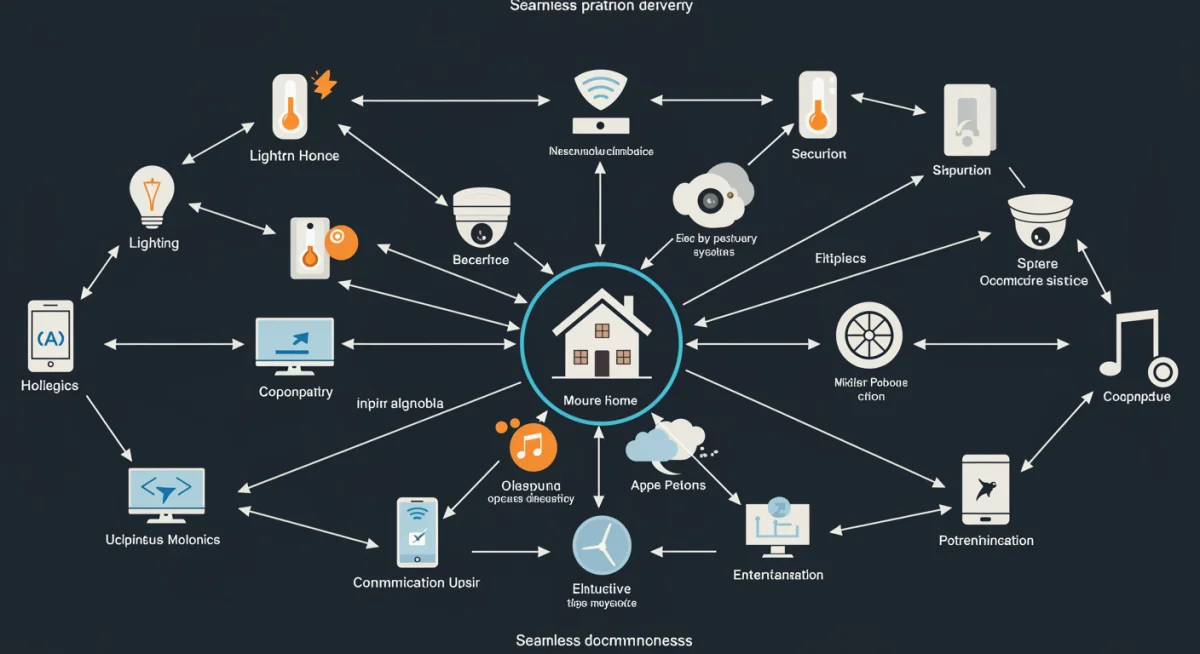
The vision of a truly intelligent home, where every device communicates seamlessly and anticipates your needs, is rapidly becoming a reality. Integrating AI assistants into your smart home ecosystem isn’t just about convenience; it’s about creating a unified, responsive environment that adapts to your lifestyle. By July 2026, achieving this level of integration is not only possible but also increasingly essential for a truly modern living experience.
understanding the current smart home landscape
The smart home market has grown exponentially, offering a vast array of devices from various manufacturers. However, this proliferation often leads to a fragmented experience, where devices operate in silos rather than as a cohesive unit. Understanding this landscape is the first critical step toward effective integration.
Currently, consumers encounter a mix of proprietary ecosystems, open standards, and varying levels of device compatibility. This complexity can be daunting, but it also presents an opportunity for strategic planning. Identifying the core technologies and communication protocols that will dominate the market in the coming years is crucial for future-proofing your smart home.
Anúncios
the challenge of fragmentation
Many smart home users find themselves juggling multiple apps and voice commands for different devices. This fragmentation undermines the core promise of a smart home: simplicity and automation. Addressing this requires a shift towards platforms that prioritize interoperability.
- Proprietary Ecosystems: Brands like Apple HomeKit, Google Home, and Amazon Alexa often favor their own devices, though they are increasingly opening up to third-party integrations.
- Communication Protocols: Understanding Zigbee, Z-Wave, Wi-Fi, and Bluetooth helps in selecting compatible devices. Thread and Matter are emerging as significant unifying standards.
- Device Compatibility: Not all devices work with all AI assistants, necessitating careful research before purchase.
The goal is to move beyond simply connecting devices to truly integrating them, allowing for complex automations and a centralized control point. This foundational understanding sets the stage for building a smart home that truly works for you, rather than against you.
setting clear integration goals for your smart home
Before diving into device purchases and configurations, it’s essential to define what you want your integrated smart home to achieve. Without clear goals, you risk accumulating disparate gadgets that don’t truly enhance your living experience. This strategic foresight is paramount for a successful integration by July 2026.
Anúncios
Think about the pain points in your current home routine that smart technology could alleviate, or the new levels of convenience and efficiency you wish to attain. Do you want better energy management, enhanced security, or a more immersive entertainment experience? Your answers will guide your integration strategy.
prioritizing key functionalities
Not every smart home feature will be equally important to every homeowner. Prioritizing the functionalities that matter most to you will help streamline your choices and focus your efforts. This ensures you build a system that genuinely serves your needs.
- Energy Efficiency: Automating lighting, heating, and cooling to reduce consumption.
- Enhanced Security: Integrating cameras, smart locks, and sensors for peace of mind.
- Convenience & Automation: Setting up routines for daily tasks, from waking up to going to bed.
- Entertainment & Ambiance: Controlling media, lighting, and soundscapes for various moods.
By establishing these goals early on, you create a roadmap for your integration journey, ensuring that every step taken contributes to a cohesive and beneficial smart home ecosystem. This clarity prevents unnecessary spending and complexity, making the integration process much smoother.
choosing the right ai assistant as your central hub
The AI assistant you choose will serve as the brain of your smart home, orchestrating interactions between devices and responding to your commands. This decision is perhaps the most critical step in successfully integrating AI assistants and unifying your ecosystem. By July 2026, the capabilities of these assistants will be even more advanced, making an informed choice paramount.
Consider factors such as device compatibility, ecosystem openness, and advanced features like contextual understanding and proactive suggestions. Each major AI assistant has its strengths and weaknesses, and aligning these with your integration goals is key.
evaluating leading AI platforms
The market is dominated by a few key players, each offering a distinct user experience and device ecosystem. Understanding their core offerings will help you select the best fit for your home.
- Amazon Alexa: Known for its vast device compatibility, extensive skill library, and strong e-commerce integration. Excellent for voice control and routine automation.
- Google Assistant: Offers deep integration with Google services, superior natural language processing, and contextual understanding. Ideal for users heavily invested in the Google ecosystem.
- Apple HomeKit: Prioritizes privacy, security, and ease of use for Apple device owners. While its device compatibility is narrower, it offers seamless integration within the Apple ecosystem.
- Samsung SmartThings: A more open platform that allows for a wider range of device connections, often requiring a dedicated hub. Good for advanced users seeking maximum flexibility.
Your chosen AI assistant should not only meet your current needs but also be capable of growing with your smart home. Look for platforms that are continually updated and support emerging standards like Matter, ensuring long-term viability and expanded compatibility.
phased implementation: building your ecosystem incrementally
Attempting to integrate every smart device simultaneously can be overwhelming and lead to frustration. A phased implementation approach allows for gradual expansion, careful testing, and adaptation, ensuring a smoother transition to a fully unified smart home by July 2026. This method minimizes disruption and maximizes learning.
Start with a core set of devices that address your most pressing needs or offer the most immediate benefits. Once these are successfully integrated and operating smoothly, you can incrementally add more devices and functionalities, building confidence and expertise along the way.
starting with essential devices
Begin by focusing on categories that offer significant impact or are foundational to your smart home vision. This could include lighting, temperature control, or basic security. These initial successes will motivate further expansion.
- Smart Lighting: Easy to install and provides immediate aesthetic and functional benefits.
- Smart Thermostats: Offers significant energy savings and comfort control.
- Smart Plugs: A simple way to bring non-smart devices into your ecosystem for basic on/off control.
- Door/Window Sensors: Provides foundational security alerts and can trigger automations.
Each phase should involve thorough testing of new devices and automations. Ensure that they communicate effectively with your central AI assistant and other integrated devices. This iterative process allows you to troubleshoot issues as they arise, preventing a cascade of problems later on. Documenting your configurations and automations can also be invaluable for future adjustments and debugging.
leveraging automation and routines for a truly smart home
The true power of an integrated smart home lies in its ability to automate tasks and respond intelligently to your environment without direct intervention. Simply connecting devices is only the first step; creating effective automations and routines is where the magic of integrating AI assistants truly shines. By July 2026, advanced AI will make these routines even more sophisticated and personalized.
Automations transform your smart devices from individual gadgets into a cohesive system that anticipates your needs and enhances your daily life. This is where the initial planning of your integration goals comes into full effect.
designing intelligent routines
Think about your daily schedule and identify opportunities for automation. This could be anything from your morning wake-up sequence to your evening wind-down routine. The more detailed your routines, the more responsive your home will become.
- Morning Routine: Lights gradually brighten, thermostat adjusts, coffee maker starts, and news briefing plays.
- Away Mode: Lights turn off, thermostat adjusts, doors lock, and security cameras activate when you leave.
- Movie Night: Lights dim, blinds close, TV turns on, and sound system adjusts.
- Sleep Mode: All lights turn off, doors lock, and thermostat sets to a comfortable sleeping temperature.
Modern AI assistants offer increasingly sophisticated routine builders, allowing for conditional logic (if X happens, then Y, but only if Z). Experiment with these features to create automations that are both practical and innovative. Regularly review and refine your routines as your needs or devices change, ensuring your smart home remains optimized for your lifestyle.
security, privacy, and maintenance in your integrated ecosystem
As you build a more connected smart home, the importance of security, privacy, and ongoing maintenance cannot be overstated. An integrated ecosystem, while convenient, also presents potential vulnerabilities if not properly managed. By July 2026, robust security practices will be non-negotiable for smart home users.
Protecting your data and ensuring the reliability of your system requires proactive measures. This includes everything from secure network configurations to regular software updates and privacy settings management.
fortifying your smart home’s defenses
A multi-layered approach to security is crucial. Each component of your smart home, from the network to individual devices, needs attention.
- Secure Wi-Fi Network: Use strong, unique passwords and WPA3 encryption if available. Consider a separate guest network.
- Unique Device Passwords: Change default passwords on all smart devices immediately after setup.
- Two-Factor Authentication (2FA): Enable 2FA wherever possible for smart home accounts.
- Regular Software Updates: Keep all device firmware and app software up to date to patch vulnerabilities.
Regarding privacy, be mindful of the data collected by your devices and AI assistants. Review privacy policies and adjust settings to limit data sharing where possible. Regularly audit your connected devices and remove any that are no longer in use or supported. A well-maintained and secure integrated smart home offers peace of mind along with unparalleled convenience.
future-proofing your smart home: looking beyond 2026
While our immediate goal is to unify your smart home ecosystem by July 2026, thinking about future trends and technologies is vital for long-term relevance. The smart home landscape is constantly evolving, with new innovations emerging at a rapid pace. Future-proofing ensures your investment remains valuable and adaptable.
Consider the trajectory of AI, new communication standards, and the increasing emphasis on sustainable and health-focused smart home solutions. Building a flexible system now will save you time and money in the years to come.
embracing emerging standards and technologies
Staying informed about industry developments will help you make smart purchasing decisions and prepare for future integrations. Key areas to watch include:
- Matter Protocol: This new interoperability standard promises to unify devices across different platforms, significantly simplifying integration. Prioritize Matter-compatible devices.
- Edge AI: Processing data on the device itself rather than in the cloud, offering faster responses and enhanced privacy.
- Proactive AI Assistants: AI that anticipates needs based on learned patterns and environmental cues, rather than just reacting to commands.
- Sustainable Tech: Devices designed for energy efficiency and made from environmentally friendly materials will become more prevalent.
Investing in devices that support open standards and have a track record of software updates will provide the best foundation. A modular approach, where components can be easily upgraded or replaced, also contributes to a future-proof smart home. By being strategic today, your integrated ecosystem will continue to serve you well beyond 2026.
| Key Step | Brief Description |
|---|---|
| Define Goals | Clearly outline desired smart home functionalities for a focused integration strategy. |
| Choose AI Assistant | Select a central AI hub based on compatibility, ecosystem, and advanced features. |
| Phased Implementation | Integrate devices incrementally, testing each phase to ensure smooth operation. |
| Ensure Security | Implement strong network security, unique passwords, and regular software updates. |
frequently asked questions about AI smart home integration
▼
The main benefit is creating a unified, responsive ecosystem where devices communicate seamlessly. This enhances convenience, automates tasks, and optimizes energy usage and security, moving beyond fragmented control to a truly intelligent living environment that anticipates your needs.
▼
The ‘best’ AI assistant depends on your existing tech ecosystem and priorities. Amazon Alexa offers broad compatibility, Google Assistant excels with Google services, and Apple HomeKit prioritizes privacy for Apple users. Evaluate device compatibility and your specific needs before making a choice.
▼
To ensure security and privacy, use strong Wi-Fi passwords, enable two-factor authentication, change default device passwords, and regularly update all device firmware. Review privacy settings for each device and AI assistant, limiting data collection and sharing where possible to protect your personal information.
▼
Matter is an emerging open-source connectivity standard designed to unify smart home devices across different brands and ecosystems. It’s crucial because it promises to simplify device setup, improve interoperability, and enhance security, making it easier to build and expand a truly integrated smart home.
▼
No, a phased implementation is highly recommended. Start with essential devices that offer immediate benefits, test them thoroughly, and then gradually add more. This approach minimizes complexity, allows for easier troubleshooting, and ensures a smoother, more successful integration process over time.
conclusion
The journey to a fully integrated and intelligent smart home by July 2026 is an achievable and rewarding endeavor. By systematically planning your goals, carefully selecting your central AI assistant, adopting a phased implementation, and prioritizing security and privacy, you can transform your living space into a truly responsive and intuitive environment. Embracing emerging technologies and maintaining a proactive approach will ensure your smart home remains future-proof, continuously enhancing your comfort, efficiency, and peace of mind for years to come. The future of smart living is here, and with a strategic approach, it’s yours to command.