
Anúncios
The technological future of smart cities and sustainable connectivity is transforming urban services through 5G and fiber infrastructure, sensors, and renewable energy, enabling electric mobility, privacy-conscious data management, and scalable funding models that make it possible to replicate efficient, resilient solutions.
The Technological Future of Smart Cities and Sustainable Connectivity sparks curiosity: how will our commutes, energy use, and privacy change? With real examples and practical questions, this article helps you understand what’s coming.
Urban Infrastructure: 5G Networks, Fiber, and Sensors for Efficient Connectivity
The Technological Future of Smart Cities and Sustainable Connectivity depends on robust infrastructure. Here we’ll look at how 5G networks, fiber and sensors come together to deliver efficient connectivity.
We explain solutions and practical examples that help cities connect services, mobility, and energy.
Anúncios
5G Networks: Speed and Coverage
5G lowers latency and increases capacity. It enables immediate responses in critical systems.
- Faster speeds for real-time video streaming.
- Support for thousands of devices per km².
- Better communication between vehicles and traffic lights.
Deployment requires local nodes and coverage planning. Small antennas (small cells) are mounted on poles and building facades.
Coordination among carriers prevents interference and improves the user experience.
Fiber Optics: The Backbone
Fiber provides stable bandwidth for moving massive amounts of data. It is essential for 5G backhaul.
- High-capacity connections for urban data centers.
- Support for cameras, traffic lights, and control panels.
- Lower latency and greater reliability than wireless solutions.
Strategic fiber deployment reduces bottlenecks. The recommended approach is to combine fiber in critical areas with 5G for mobile coverage.
Sensors and Data Platforms
Sensors collect information on traffic, air quality, and energy consumption. That data enables real-time decisions.
- Environmental sensors to monitor pollution and noise.
- Flow detectors to optimize traffic signals and transit routes.
- Energy meters to manage power grids and renewables.
Data should be processed on local and cloud platforms, using models that prioritize privacy and efficiency.
Interoperability between devices and open standards makes it easier to integrate vendors and avoids siloed solutions.
In short, urban infrastructure that combines 5G networks, fiber and sensors creates a solid foundation for efficient connectivity, better mobility, and smarter services.
Mobility and Energy: Sustainable Solutions That Improve Everyday Life
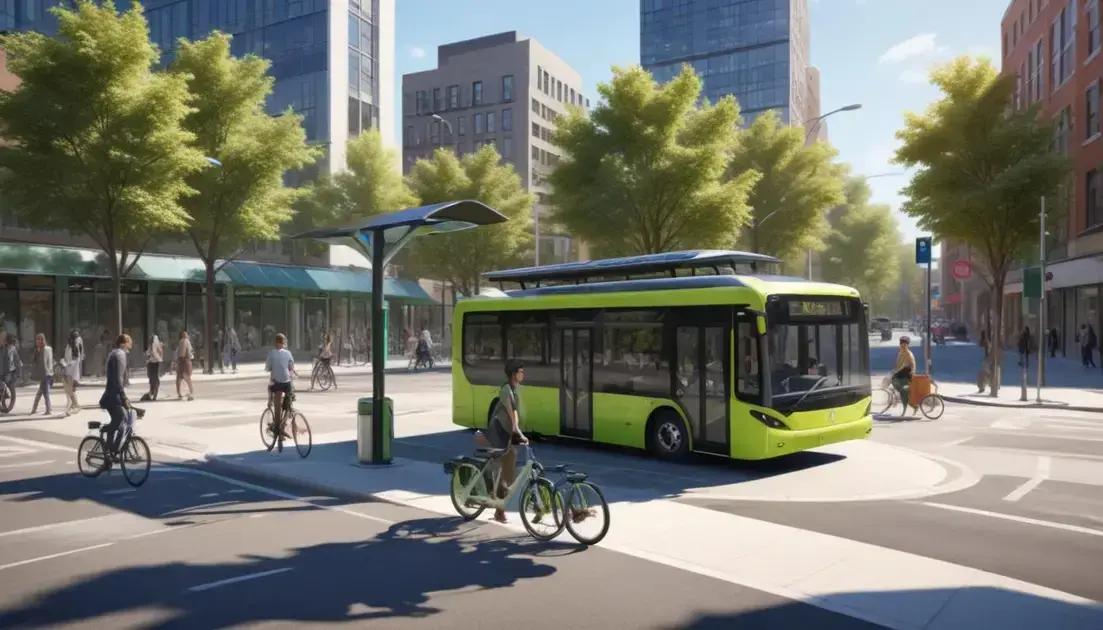
Mobility and energy come together to create solutions that make urban life easier and cleaner. Here we’ll look at practical ideas that work today.
We explain how vehicles, charging infrastructure, and power grids are adapting to become more sustainable.
Electric and Shared Transportation
Electric buses and car-sharing systems cut emissions and costs. They are key to a healthier city.
- Electric bus fleets with optimized routes.
- Shared vehicles for short trips and first/last-mile travel.
- Incentives for using bicycles and e-scooters.
Charging stations are placed at strategic points: bus stations, plazas, and parking lots. This helps prevent range anxiety.
Integrating Renewable Energy
Charging points work best with solar power and local storage. This reduces demand at peak hours.
Panels on bus stops, shelters, and rooftops power chargers and lighting. A simple system can provide stable, clean energy.
Local microgrids let energy flow where it’s needed. If there’s an outage, critical services keep running.
Smart Demand Management
Combining software with real-time metering optimizes grid use. It prevents overloads and lowers costs.
- Systems that schedule charging during low-demand hours.
- Platforms that balance consumption between buildings and transportation.
- Dynamic rates to encourage off-peak charging.
Data makes it possible to adjust charging schedules and prioritize emergency vehicles. All of this improves efficiency without complicating things for users.
In short, sustainable solutions for mobility and energy combine electric transportation, renewables, and smart management. Together, these measures improve quality of life and make the city more resilient.
Privacy and Governance: Who Uses the Data and How It Is Protected
Privacy and governance determine who can access urban data and how it is used. Understanding clear rules and simple practices is key.
We’ll look at mechanisms that give citizens control and protect information without holding back innovation.
Transparency and Data Control
People should receive clear information about what data is collected and why. Consent should be simple and reversible.
- Allow opt-in and make it easy to revoke permissions.
- Dashboards that show what data is used and for what purpose.
- Access logs that show who viewed the information.
Transparency builds trust and helps detect misuse. Plain-language explanations make things easier to understand.
Privacy isn’t just technical: it’s about communication and giving users real access to control.
Technical Protection: Anonymization and Encryption
Anonymization reduces risk when data is shared for analysis. Direct identifiers are removed and samples are aggregated.
Encryption protects information in transit and at rest. Keys and access controls limit who can read sensitive data.
- Apply anonymization before sharing datasets.
- Use end-to-end encryption for critical communications.
- Control access with strong authentication and audit logs.
In addition, data minimization (collecting only what is necessary) reduces the impact of potential breaches.
Accountability and Legal Frameworks
Rules and responsibilities should define penalties and obligations for vendors and public administrations.
- Legal frameworks that require transparency and data protection.
- Independent audits to validate governance practices.
- Clear contracts that set limits on data use and retention.
Accountability includes incident response plans and obligations to notify the public.
Effective governance combines laws, technical oversight, and public participation. Open models and common standards make interoperability easier and prevent silos.
Taken together, a balanced privacy and governance strategy protects people, enables smart services, and builds the trust a city needs to move forward safely.
Investment and Scalability: Funding Models and Case Studies

Investment and scalability are key to moving urban solutions from pilot to reality. Here we describe clear models and examples that work.
You’ll see how to combine public money, private capital, and community resources so projects can grow without losing impact.
Public-Private Funding Models
Partnerships between governments and companies make it possible to share risks and resources. They often speed up deployment.
- Concession contracts to operate services over long periods.
- Collaboration agreements in which the private sector provides investment and the public sector streamlines permits.
- Pay-per-service models that align incentives and maintenance.
These models require clear contracts and measurable goals. That avoids surprises and attracts capital.
Financial Instruments and Innovation
There are several ways to raise funds without relying on a single source. Each instrument offers different advantages.
- Green bonds for projects with measurable environmental impact.
- Local crowdfunding to involve the community.
- Impact funds that measure social returns as well as financial ones.
A mix of instruments reduces financial pressure and improves public acceptance.
Tax incentives and public guarantees also make early-stage private investment easier. Small guarantees can unlock larger amounts.
Scalable Case Studies
Successful projects often start in a single neighborhood and are then replicated. Modular design and solid data make replication easier.
- Solar microgrids that integrate batteries and expand block by block.
- EV charging networks installed in phases.
- Urban data platforms that start with one service and add modules.
Documenting costs, timelines, and results makes it possible to adapt the model to other areas with less risk.
Pilot projects should include simple metrics: cost per user, emissions reductions, and time to full operation. These indicators attract new investors.
Strategies for Scaling Successfully
Scaling isn’t just about more infrastructure; it’s about managing operations, talent, and governance.
- Establish standard procedures and clear operating manuals.
- Create incentives for local suppliers and train staff.
- Implement simple metrics and dashboards for quick decision-making.
Ongoing communication with the community and transparency in how funds are used build trust and make expansion easier.
Altogether, combining flexible funding models , well-documented case studies, and clear operating strategies is the path to achieving scalability and real impact on the city.
In conclusion, combining solid infrastructure, sustainable mobility, data governance, and investment models makes cities more efficient and livable. With well-measured pilots and transparency, solutions that improve daily life can be scaled. Start with clear steps, evaluate the results, and replicate what works.
FAQ – Frequently Asked Questions About Smart Cities and Sustainable Connectivity
What is the key infrastructure of a smart city?
It is the combination of 5G networks, fiber optics and sensors that lets devices communicate and deliver real-time services.
How does integrating mobility and energy improve daily life?
It reduces emissions and travel times through electric transportation, charging stations, and renewable energy that powers mobility efficiently.
What measures protect the privacy of urban data?
Clear consent, anonymization, encryption, and audits are used to limit access and prevent misuse of information.
How are smart city projects funded and scaled?
Through public-private partnerships, green bonds, impact funds, and modular pilots that show results before expanding.