Cybersecurity Frameworks 2026: Best for U.S. Mid-Sized Businesses
Implementing the right cybersecurity framework is critical for U.S. mid-sized businesses in 2026, balancing robust protection with optimal return on investment against evolving cyber threats.
Choosing the optimal cybersecurity frameworks 2026 is a pivotal decision for U.S. mid-sized businesses navigating an increasingly complex digital threat landscape. The right framework can mean the difference between resilient operations and devastating breaches.
The Evolving Threat Landscape for Mid-Sized Businesses
Mid-sized businesses often find themselves in a precarious position within the cybersecurity realm. They possess valuable data and intellectual property that make them attractive targets for cybercriminals, yet they typically lack the extensive resources and dedicated security teams of larger enterprises. The year 2026 is projected to bring even more sophisticated threats, from advanced ransomware strains to AI-powered phishing attacks, making proactive and structured security measures not just advisable, but essential for survival.
The perception that only large corporations are targets is a dangerous misconception. In fact, smaller to mid-sized companies are frequently targeted because they are perceived as having weaker defenses, making them easier prey. This vulnerability translates into significant financial losses, reputational damage, and potential regulatory penalties. Understanding this heightened risk is the first step toward implementing an effective cybersecurity strategy tailored to their specific needs and budget constraints.
Navigating the array of available cybersecurity frameworks can be daunting. Each framework offers a different approach, varying in complexity, scope, and compliance requirements. For a mid-sized business, the goal is to select a framework that provides comprehensive protection without overburdening their operational capabilities or financial resources. This means evaluating not just the security benefits, but also the potential return on investment (ROI) and the ease of implementation and maintenance over time.
The increasing interconnectedness of business operations, supply chains, and remote work environments further complicates security efforts. A single weak link can compromise an entire system, impacting multiple stakeholders. Therefore, any chosen framework must address not only internal vulnerabilities but also external dependencies. The frameworks discussed in this article offer structured methodologies to help mid-sized businesses build robust defenses, manage risks effectively, and comply with relevant regulations, ultimately safeguarding their assets and ensuring business continuity in a challenging digital future.
NIST Cybersecurity Framework (CSF): A Flexible Foundation
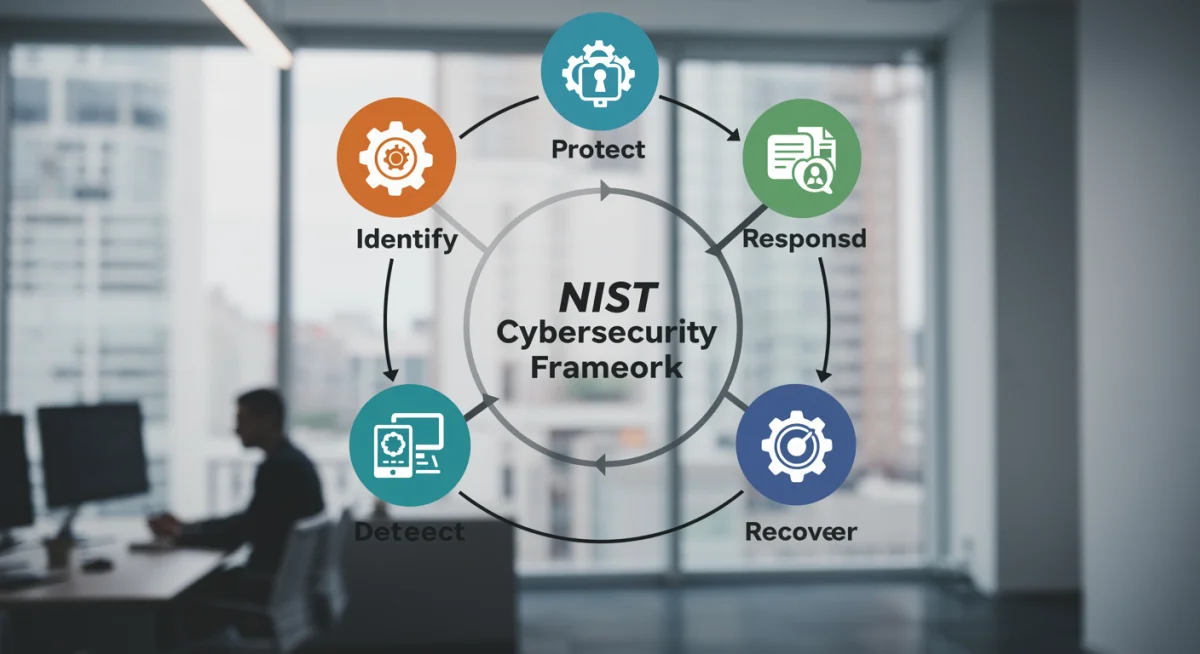
The National Institute of Standards and Technology (NIST) Cybersecurity Framework (CSF) is widely recognized and adopted, particularly within the U.S., for its flexible and risk-based approach to managing cybersecurity. It provides a common language and a systematic methodology for organizations to assess, manage, and improve their cybersecurity posture. For mid-sized businesses, its adaptability is a significant advantage, allowing them to tailor its principles to their unique operational context and resource availability.
The NIST CSF is structured around five core functions: Identify, Protect, Detect, Respond, and Recover. These functions provide a high-level, strategic view of an organization’s management of cybersecurity risk. Unlike prescriptive standards, NIST CSF offers guidance and best practices rather than strict mandates, making it less overwhelming for businesses with limited IT staff or budgets. It encourages a continuous improvement cycle, enabling companies to mature their security practices over time.
Core Functions and Their Benefits
- Identify: Understanding your assets, risks, and vulnerabilities. This stage is crucial for prioritizing security efforts and allocating resources effectively.
- Protect: Implementing safeguards to ensure the delivery of critical services. This includes access control, data security, and protective technology.
- Detect: Developing capabilities to identify cybersecurity events. Timely detection is vital for minimizing damage from attacks.
- Respond: Taking action regarding a detected cybersecurity incident. Effective response planning can significantly reduce recovery time.
- Recover: Planning for resilience and restoring capabilities impaired by a cybersecurity incident. Business continuity and disaster recovery are key here.
The ROI for NIST CSF often comes from its ability to reduce the likelihood and impact of breaches, thus avoiding costly downtime, legal fees, and reputational damage. Its non-prescriptive nature means businesses can implement controls that are most relevant to their specific risks, optimizing resource allocation. Moreover, its widespread recognition can aid in demonstrating due diligence to partners and customers, potentially opening up new business opportunities. While not a compliance standard itself, it aligns well with many regulatory requirements, simplifying compliance efforts.
Cybersecurity Maturity Model Certification (CMMC): Government Contracting Focus
The Cybersecurity Maturity Model Certification (CMMC) is a unified standard for implementing cybersecurity across the U.S. defense industrial base (DIB). While initially designed for Department of Defense (DoD) contractors, its principles are increasingly relevant for any business that handles sensitive government information or operates within critical infrastructure supply chains. For mid-sized businesses aspiring to or currently engaged in government contracts, CMMC compliance is not optional; it’s a prerequisite.
CMMC builds upon existing cybersecurity frameworks, primarily NIST SP 800-171, and introduces a verification component with third-party assessments. It comprises five maturity levels, ranging from basic cyber hygiene (Level 1) to advanced and progressive cybersecurity practices (Level 5). Each level specifies a set of practices and processes that an organization must implement and demonstrate to achieve certification. This structured approach provides clarity on what is expected at different tiers of security maturity.
CMMC Levels and Their Implications
- Level 1 (Foundational): Basic cyber hygiene, focusing on protecting Federal Contract Information (FCI).
- Level 2 (Intermediate): Good cyber hygiene, protecting Controlled Unclassified Information (CUI).
- Level 3 (Good): Implementing all NIST SP 800-171 requirements and additional CMMC practices.
- Level 4 (Proactive): Advanced and proactive cybersecurity practices.
- Level 5 (Advanced/Progressive): Optimizing cybersecurity capabilities to detect and respond to advanced persistent threats.
The ROI for CMMC, while often viewed through the lens of compliance costs, is significant for businesses seeking or maintaining government contracts. Non-compliance can lead to disqualification from lucrative opportunities, making the investment in CMMC a direct enabler of revenue. Furthermore, the rigorous security practices mandated by CMMC inherently strengthen a business’s overall cybersecurity posture, protecting against a broader range of threats, even those unrelated to government work. This enhanced security can reduce the risk of breaches and associated costs, offering a secondary ROI through improved resilience and trust.
ISO 27001/27002: International Standard for Information Security
ISO/IEC 27001 is an international standard that provides a framework for an information security management system (ISMS). ISO 27002 provides a code of practice for information security controls, offering detailed guidance on how to implement the controls outlined in ISO 27001. For mid-sized businesses with international operations, or those seeking to demonstrate a globally recognized level of security assurance, ISO 27001 certification is a powerful differentiator. It emphasizes a systematic approach to managing sensitive company information so that it remains secure.
The core of ISO 27001 is its focus on a risk-driven approach to information security. Organizations are required to identify their information assets, assess the risks to those assets, and then implement appropriate controls to mitigate those risks. This framework is not prescriptive about specific technologies but rather about establishing a robust management system. This allows businesses to choose controls that are most relevant and cost-effective for their specific environment, aligning with their risk appetite and business objectives.
Key Principles of ISO 27001
- Confidentiality: Ensuring information is accessible only to those authorized to have access.
- Integrity: Safeguarding the accuracy and completeness of information and processing methods.
- Availability: Ensuring authorized users have access to information and associated assets when required.
- Risk Management: A continuous process of identifying, assessing, and treating information security risks.
The ROI for ISO 27001 extends beyond mere compliance. Achieving certification can significantly enhance a company’s reputation and build trust with customers, partners, and stakeholders, especially in global markets. It often serves as a competitive advantage, proving a commitment to information security that can lead to new business opportunities. Internally, implementing an ISMS through ISO 27001 can lead to improved operational efficiency, better risk awareness among employees, and a more structured approach to incident management, ultimately reducing the overall cost of security incidents. While the initial investment can be substantial, the long-term benefits in terms of market access, trust, and reduced risk often outweigh the costs for ambitious mid-sized businesses.
CIS Controls: Actionable Best Practices for Immediate Impact
The Center for Internet Security (CIS) Critical Security Controls (CSCs) offer a prioritized set of actions that organizations can take to improve their cybersecurity posture. Unlike broader frameworks that focus on management systems, CIS Controls are highly actionable and prescriptive, making them particularly attractive for mid-sized businesses that need clear, tangible steps to enhance their security without extensive strategic planning. They are recognized globally as a consensus-developed list of best practices for cyber defense.
The controls are divided into three implementation groups (IGs), allowing businesses to adopt them incrementally based on their resources and risk profile. IG1, for example, focuses on foundational cyber hygiene that every organization should implement, providing immediate and significant risk reduction. This tiered approach ensures that even businesses with limited resources can start building a strong security foundation and progressively mature their defenses.
Implementation Groups and Their Scope
- IG1 (Basic Cyber Hygiene): Essential safeguards for small and medium-sized enterprises with limited IT resources, focusing on protecting against common attacks.
- IG2 (Enterprise Hygiene): For organizations with more resources and a greater risk exposure, building upon IG1 with additional controls.
- IG3 (Optimized): For enterprises dealing with highly sensitive data and sophisticated adversaries, implementing all controls.
The ROI for implementing CIS Controls is often immediate and measurable. By focusing on the most impactful security actions first, businesses can achieve significant risk reduction with a relatively lower investment compared to broader frameworks. This approach helps prevent common and costly cyberattacks, thereby preserving revenue and reputation. Moreover, CIS Controls map to other major frameworks like NIST CSF and ISO 27001, meaning that efforts spent on CIS Controls can contribute directly to compliance with other standards, streamlining future security initiatives. For mid-sized businesses seeking practical, cost-effective, and impactful cybersecurity improvements, CIS Controls offer an excellent starting point and a continuous path to maturity.
HIPAA Security Rule: Essential for Healthcare-Related Businesses
The Health Insurance Portability and Accountability Act (HIPAA) Security Rule is a critical federal standard that establishes national standards to protect individuals’ electronic protected health information (ePHI). For any mid-sized business operating in the healthcare sector, whether as a healthcare provider, a health plan, or a healthcare clearinghouse, or as a business associate handling ePHI, compliance with the HIPAA Security Rule is not merely a best practice but a legal mandate. Non-compliance carries severe financial penalties and significant reputational damage.
The Security Rule specifies administrative, physical, and technical safeguards that covered entities and business associates must implement to ensure the confidentiality, integrity, and availability of ePHI. It is a risk-based framework, requiring organizations to conduct a thorough risk analysis to identify potential threats and vulnerabilities to ePHI, and then implement reasonable and appropriate security measures. This flexibility allows organizations to tailor their security solutions to their specific needs and circumstances, while still meeting the regulatory requirements.
Key Safeguards of the HIPAA Security Rule
- Administrative Safeguards: Policies and procedures to manage security, such as security management processes, assigned security responsibility, workforce security, information access management, and security awareness training.
- Physical Safeguards: Measures to protect electronic information systems and related buildings and equipment from natural and environmental hazards and unauthorized intrusion, including facility access controls and workstation security.
- Technical Safeguards: Technology and associated policies and procedures that protect ePHI and control access to it, such as access control, audit controls, integrity controls, and transmission security.
The ROI for HIPAA compliance, while primarily driven by avoiding penalties, also includes enhanced patient trust and improved operational efficiency. Demonstrating robust ePHI protection is essential for maintaining patient confidence and is often a prerequisite for partnerships within the healthcare ecosystem. Investing in HIPAA-compliant security measures also generally improves overall data security, protecting against a wider range of cyber threats. For mid-sized businesses in healthcare, the cost of non-compliance far outweighs the investment in robust security, making HIPAA a critical framework for both legal and business viability.
Choosing the Right Framework: Factors for Mid-Sized Businesses
Selecting the appropriate cybersecurity framework is a strategic decision that requires careful consideration of several factors unique to mid-sized businesses. There isn’t a one-size-fits-all solution; the best framework will align with the company’s specific industry, regulatory obligations, risk appetite, and available resources. A thorough assessment of these elements is crucial to ensure that the chosen framework delivers optimal protection and a favorable return on investment.
Firstly, industry-specific regulations play a significant role. For instance, healthcare businesses must prioritize HIPAA, while DoD contractors must adhere to CMMC. For those without specific regulatory mandates, frameworks like NIST CSF or CIS Controls offer broader applicability and flexibility. Understanding the legal and compliance landscape is paramount before making any commitments. This foundational understanding helps narrow down the choices and ensures that core requirements are met from the outset.
Key Considerations for Selection
- Industry and Regulatory Requirements: Identify any mandatory compliance standards (e.g., HIPAA, CMMC, PCI DSS).
- Current Cybersecurity Maturity: Assess existing security practices and infrastructure to determine a realistic starting point.
- Available Resources (Budget & Staff): Evaluate financial capacity and IT personnel expertise for implementation and ongoing management.
- Risk Profile and Data Sensitivity: Understand the types of data handled and the potential impact of a breach.
- Scalability and Future Growth: Choose a framework that can adapt as the business expands and its security needs evolve.
The ROI of a cybersecurity framework for a mid-sized business is multifaceted. It includes not only the direct cost savings from preventing breaches but also the intangible benefits of enhanced reputation, increased customer trust, and potential for new business opportunities through demonstrated security posture. A framework that is too complex or costly for a mid-sized business can lead to incomplete implementation and wasted resources, undermining its effectiveness. Conversely, a well-chosen framework that is appropriately scaled can provide robust protection, streamline operations, and contribute significantly to long-term business success. Ultimately, the decision should be a strategic investment that supports overall business objectives while mitigating digital risks effectively.
Implementing and Maintaining Your Chosen Framework
Once a cybersecurity framework has been selected, the journey of implementation and continuous maintenance begins. This phase is critical and often more challenging than the selection itself. For mid-sized businesses, a phased approach, coupled with a commitment to ongoing effort, is key to successful adoption and ensuring the framework continues to provide value. It’s not a one-time project but an evolving process that adapts to new threats and business changes.
Initial implementation typically involves a gap analysis to identify discrepancies between current security practices and the chosen framework’s requirements. This assessment helps prioritize actions and allocate resources efficiently. Developing a clear roadmap with achievable milestones is essential to avoid overwhelming internal teams. Training employees on new policies and procedures is also paramount, as human error remains a significant vulnerability in any security system. Effective communication and a culture of security awareness are foundational to success.
Steps for Effective Implementation and Maintenance
- Gap Analysis and Prioritization: Identify differences between current state and framework requirements, then prioritize remediation efforts.
- Resource Allocation: Secure necessary budget, personnel, and tools for implementation and ongoing operations.
- Policy and Procedure Development: Create clear, actionable policies and procedures aligned with the framework.
- Employee Training and Awareness: Educate staff on their roles in maintaining security and fostering a security-conscious culture.
- Continuous Monitoring and Improvement: Regularly review, audit, and update security controls to address evolving threats and business changes.
The ongoing maintenance of a cybersecurity framework is equally important. The threat landscape is dynamic, meaning security controls must be regularly reviewed, tested, and updated. This includes periodic risk assessments, vulnerability scanning, penetration testing, and incident response plan drills. Automated security tools can assist in monitoring and reporting, reducing the burden on limited IT staff. The ROI from continuous maintenance is realized through sustained protection, reduced incident response costs, and ongoing compliance. Neglecting maintenance can quickly render even the most robust framework ineffective, exposing the business to renewed risks and negating the initial investment. Therefore, a commitment to perpetual vigilance and adaptation is fundamental for long-term cybersecurity resilience.
| Framework | Key Benefit for Mid-Sized Businesses |
|---|---|
| NIST CSF | Flexible, risk-based approach adaptable to varying business needs and resources. |
| CMMC | Mandatory for DoD contractors, enabling access to government contracts and enhanced security. |
| ISO 27001 | Internationally recognized; builds global trust and competitive advantage. |
| CIS Controls | Actionable, prioritized steps for immediate and significant risk reduction. |
Frequently Asked Questions About Cybersecurity Frameworks
The primary benefit is a structured approach to risk management, leading to improved protection against cyber threats, reduced financial losses from breaches, enhanced reputation, and often, compliance with industry regulations. It transforms reactive security into a proactive, strategic effort.
NIST CSF is a flexible, risk-based framework predominantly used in the U.S., offering guidance rather than strict requirements. ISO 27001 is an international standard for an Information Security Management System, providing a formal certification that demonstrates global commitment to security management.
While CMMC is mandatory for DoD contractors, its rigorous security practices are increasingly becoming a benchmark for supply chain security across critical infrastructure. Businesses not directly contracting may still benefit from its enhanced security posture and demonstrate due diligence to partners.
The CIS Critical Security Controls (CSCs), particularly Implementation Group 1, are often considered the most cost-effective for immediate impact. They provide a prioritized list of actionable steps that deliver significant risk reduction with relatively lower investment, making them ideal for resource-constrained businesses.
ROI can be measured through reduced breach incidents, lower recovery costs, avoided regulatory fines, enhanced customer trust leading to new business, and improved operational efficiency. Quantifying these benefits requires tracking security metrics and comparing them against pre-framework performance.
Conclusion
For U.S. mid-sized businesses, the strategic selection and diligent implementation of the right cybersecurity framework in 2026 is no longer a luxury but a fundamental necessity for sustained growth and resilience. Whether opting for the adaptable guidance of NIST CSF, the compliance-driven rigor of CMMC, the globally recognized assurance of ISO 27001, the actionable steps of CIS Controls, or the sector-specific mandates of HIPAA, the ultimate goal remains consistent: to fortify digital defenses against an ever-evolving threat landscape. The investment in a robust framework not only mitigates significant financial and reputational risks but also fosters trust with clients and partners, ultimately contributing to a stronger, more secure, and more competitive business future. Proactive cybersecurity is, without doubt, a critical driver of long-term success.