AI Regulations 2026: U.S. Business Compliance Guide

U.S. businesses must proactively understand and adapt to the evolving AI regulatory landscape by 2026 to ensure compliance, minimize legal risks, and responsibly integrate artificial intelligence into their operations.
As 2026 approaches, the imperative for U.S. businesses to understand and prepare for emerging AI regulations grows stronger. Navigating the New AI Regulations: What U.S. Businesses Need to Know for Compliance in 2026 is no longer a future concern but an immediate strategic priority. The legal and ethical landscape surrounding artificial intelligence is rapidly evolving, demanding proactive engagement from every sector.
The Evolving Landscape of AI Governance
The regulatory environment for artificial intelligence is a dynamic and complex domain. Governments worldwide, including the United States, are grappling with how to foster innovation while mitigating the potential risks associated with AI technologies. This delicate balance is shaping legislation that will significantly impact how businesses develop, deploy, and utilize AI systems.
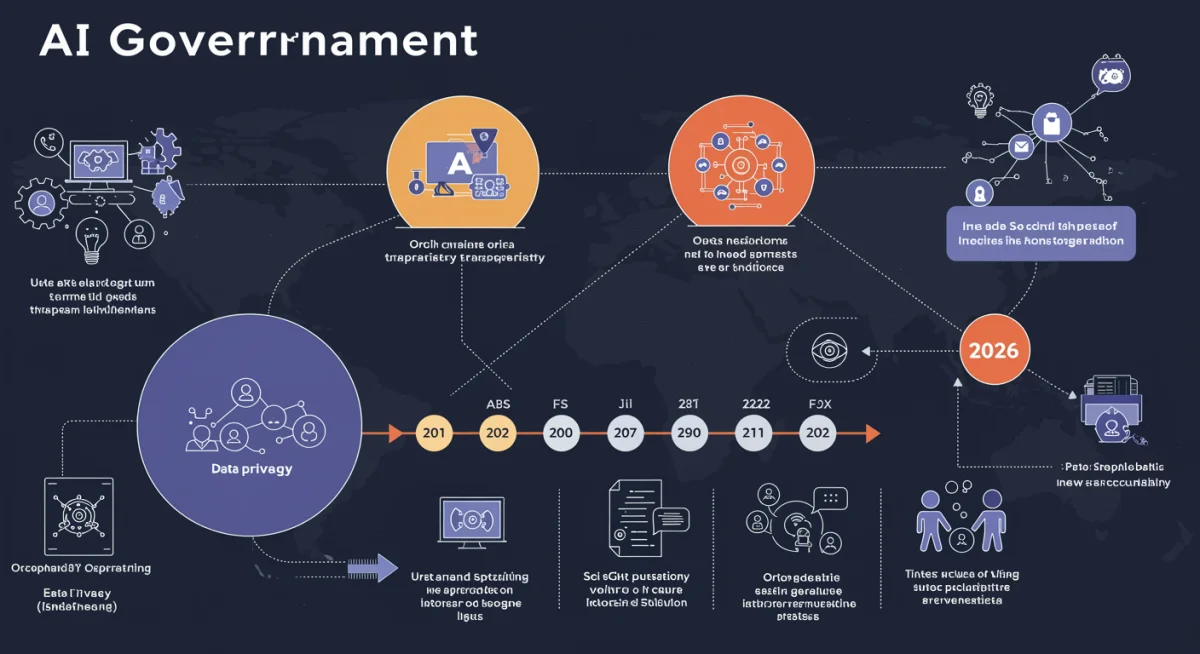
Understanding the foundational principles driving these regulations is crucial. Policymakers are primarily focused on issues such as data privacy, algorithmic transparency, fairness, accountability, and the prevention of discrimination. These concerns are not merely theoretical; they stem from real-world applications of AI that have demonstrated both immense potential and significant pitfalls. The goal is to create a framework that ensures AI serves humanity responsibly.
Key Regulatory Drivers
- Consumer Protection: Safeguarding individual rights regarding data usage and algorithmic decision-making.
- Ethical AI Development: Promoting AI systems that are fair, unbiased, and respect human values.
- National Security: Addressing concerns about the misuse of AI in critical infrastructure and defense.
- Economic Competitiveness: Balancing regulation with the need to maintain the U.S. as a leader in AI innovation.
The sheer pace of technological advancement means that regulations often lag behind innovation. However, the regulatory bodies are striving to catch up, and businesses must anticipate future requirements rather than react to them. This proactive stance will be a key differentiator for successful AI adoption.
In essence, the evolving landscape of AI governance reflects a societal push for responsible technology. Businesses that embrace this ethos early will not only ensure compliance but also build greater trust with their customers and stakeholders, fostering a more sustainable competitive advantage.
Anticipated U.S. Federal and State Initiatives
While a single, overarching federal AI regulation has yet to be enacted, the United States is seeing a patchwork of initiatives at both federal and state levels. This decentralized approach can make compliance particularly challenging for businesses operating across different jurisdictions. However, common themes and priorities are emerging, providing a clearer picture of what to expect by 2026.
Federal efforts include executive orders, proposed legislation, and guidance from agencies such as the National Institute of Standards and Technology (NIST). NIST, for instance, has developed an AI Risk Management Framework, which, while voluntary, is likely to become a de facto standard that businesses will need to consider. Congress continues to debate various bills aimed at addressing specific aspects of AI, from data privacy to algorithmic bias.
Notable Federal Developments
- Executive Orders: Directives from the White House pushing for responsible AI development and deployment across federal agencies, often setting precedents for private sector expectations.
- NIST AI Risk Management Framework: A voluntary framework providing guidance on how organizations can manage risks associated with AI.
- Sector-Specific Guidance: Agencies like the FDA and FTC are issuing guidance on AI use within their respective domains, such as healthcare and consumer protection.
At the state level, several states are leading the way with their own AI-specific laws. California, for example, with its robust privacy laws like CCPA and CPRA, is expected to continue influencing AI data governance. Other states are exploring legislation related to automated decision-making in areas such as employment, housing, and lending. This varied approach means businesses must conduct a thorough jurisdictional analysis to identify all applicable regulations.
The interplay between federal and state laws will require careful monitoring. Businesses should not assume that compliance with one set of regulations will automatically satisfy another. Instead, a comprehensive strategy that accounts for both federal baselines and state-specific nuances will be essential for effective compliance by 2026.
Key Pillars of AI Compliance: Data, Transparency, and Bias
Effective AI compliance rests on three fundamental pillars: responsible data handling, algorithmic transparency, and bias mitigation. These interconnected areas form the core of most emerging AI regulations and will demand significant attention from U.S. businesses. Neglecting any one of these can lead to severe legal penalties, reputational damage, and erosion of public trust.
Data is the lifeblood of AI, and its collection, storage, processing, and usage are under intense scrutiny. Regulations will increasingly mandate strict data governance practices, including explicit consent mechanisms, data anonymization, and robust security measures. Businesses must ensure their data pipelines are compliant with existing privacy laws and anticipate future requirements for AI-specific data handling.
Ensuring Algorithmic Transparency
Transparency in AI algorithms is about understanding how AI systems make decisions. This doesn’t necessarily mean open-sourcing proprietary code, but rather providing explainability – the ability to articulate the rationale behind an AI’s output. Regulations are likely to require businesses to demonstrate that their AI models are interpretable, especially when used in high-stakes applications like credit scoring or hiring. Lack of transparency can lead to accusations of unfairness or discrimination.
- Explainable AI (XAI): Developing and deploying AI models whose decisions can be understood by humans.
- Documentation Requirements: Maintaining clear records of AI model development, training data, and performance metrics.
- Human Oversight: Ensuring that human review and intervention are possible, especially for critical AI-driven decisions.
Bias mitigation is perhaps one of the most challenging aspects of AI compliance. AI systems can inadvertently perpetuate or even amplify existing societal biases present in their training data. Regulations will push businesses to actively identify, measure, and mitigate bias in their AI models. This involves rigorous testing, diverse data sets, and ongoing monitoring to ensure equitable outcomes for all users.
Ultimately, a robust compliance strategy will integrate these three pillars, creating a framework that not only meets legal obligations but also promotes the ethical and responsible development of AI. Businesses that prioritize these areas will be better positioned to thrive in the regulated AI landscape of 2026 and beyond.
Operationalizing Compliance: Strategies for Businesses
Translating regulatory requirements into actionable business practices is a significant undertaking. Operationalizing AI compliance demands a multi-faceted approach, integrating legal, technical, and ethical considerations across the entire organization. It’s not a one-time fix but an ongoing process that requires continuous adaptation and vigilance.
One primary strategy involves establishing an internal AI governance framework. This framework should define clear roles and responsibilities for AI development, deployment, and oversight. It should also outline policies and procedures for data management, algorithmic auditing, and incident response. A dedicated AI ethics committee or cross-functional working group can be instrumental in guiding these efforts.
Implementing Effective Compliance Measures
- Conducting AI Audits: Regularly assessing AI systems for compliance with regulatory requirements, ethical guidelines, and internal policies.
- Employee Training: Educating staff on AI ethics, data privacy, and compliance best practices.
- Vendor Management: Ensuring that third-party AI solutions and vendors also adhere to compliance standards.
Technology solutions will play a crucial role in operationalizing compliance. Tools for data anonymization, bias detection, explainable AI, and compliance monitoring can automate parts of the process and provide necessary documentation. Investing in these technologies early can save significant resources in the long run.
Furthermore, businesses should adopt a “privacy by design” and “ethics by design” approach to AI development. This means embedding compliance considerations from the very initial stages of AI project planning, rather than attempting to retrofit them later. Such an integrated approach ensures that AI systems are built with compliance and ethical principles at their core, significantly reducing future risks and rework.
The overarching goal is to embed a culture of responsible AI throughout the organization. This requires leadership commitment, clear communication, and continuous learning, ensuring that AI compliance becomes an integral part of business operations, not just a regulatory burden.
The Impact of Non-Compliance: Risks and Consequences
The stakes for AI compliance are incredibly high. The impact of non-compliance can range from substantial financial penalties to severe reputational damage and legal liabilities. Businesses that fail to adequately prepare for and adhere to the new AI regulations in 2026 face a litany of risks that could undermine their operations and long-term viability.
Financial penalties are a primary concern. Drawing parallels from existing data privacy regulations like GDPR and CCPA, AI-specific fines are expected to be significant, potentially reaching millions or even billions of dollars, depending on the severity and scale of the violation. These fines can cripple even large enterprises, let alone smaller businesses with fewer resources.
Key Consequences of Non-Compliance
- Regulatory Fines: Imposition of substantial monetary penalties by federal and state authorities.
- Legal Action: Exposure to lawsuits from individuals, consumer groups, or competitors alleging harm from biased or non-transparent AI.
- Reputational Damage: Loss of customer trust, negative media coverage, and harm to brand image, which can be difficult to recover from.
- Operational Disruption: Forced suspension of AI systems, costly remediation efforts, and diversion of resources from core business activities.
Beyond financial implications, legal liabilities pose a significant threat. Businesses could face class-action lawsuits from individuals impacted by discriminatory algorithms in areas like employment, housing, or credit. The legal landscape for AI is still forming, but the precedents set by existing discrimination and privacy laws suggest that courts will not hesitate to hold companies accountable for algorithmic harm.
Perhaps equally damaging is the erosion of public trust. In an era where consumers are increasingly aware of how their data is used and how algorithms influence their lives, a company’s failure to act responsibly can lead to a significant backlash. This can manifest as customer boycotts, negative publicity, and a general reluctance to engage with the brand, directly impacting market share and growth prospects.
Therefore, understanding and mitigating the risks of non-compliance is not just a legal obligation but a strategic imperative for any U.S. business leveraging AI. Proactive measures are the only way to safeguard against these potentially devastating consequences.
Preparing for 2026: A Roadmap for U.S. Businesses
With 2026 fast approaching, U.S. businesses need a clear roadmap to ensure they are fully prepared for the new AI regulatory environment. This preparation is an ongoing journey, not a destination, requiring continuous assessment, adaptation, and investment. A strategic approach will involve several key steps, starting now.
The first step is to conduct a thorough inventory of all AI systems currently in use or under development within the organization. This includes identifying the data sets used, the purpose of each AI application, and the potential risks associated with its deployment. Understanding your AI footprint is foundational to assessing your current compliance posture and identifying gaps.
Essential Steps in Your Compliance Roadmap
- AI System Inventory: Cataloging all AI applications, their data sources, and intended uses.
- Risk Assessment: Evaluating potential legal, ethical, and operational risks associated with each AI system.
- Policy Review and Development: Updating internal policies to align with anticipated AI regulations and best practices.
- Technology Investment: Exploring and implementing tools for AI governance, transparency, and bias detection.
Next, businesses should stay abreast of legislative developments at both federal and state levels. Engaging with industry associations, legal experts, and regulatory bodies can provide invaluable insights into emerging requirements. This intelligence gathering will enable businesses to anticipate changes and adapt their strategies proactively, rather than reactively.
Finally, fostering a culture of ethical AI and continuous learning is paramount. This involves regular training for employees, promoting responsible AI principles across all departments, and establishing feedback mechanisms to identify and address new compliance challenges. By embedding AI ethics into the organizational DNA, businesses can build resilient and responsible AI programs that will stand the test of time and regulation.
By following this roadmap, U.S. businesses can confidently navigate the complexities of the new AI regulations, turning potential challenges into opportunities for innovation and responsible growth.
| Key Aspect | Brief Description |
|---|---|
| Regulatory Landscape | Evolving federal and state initiatives focusing on data privacy, transparency, and ethical AI use. |
| Compliance Pillars | Focus on responsible data handling, algorithmic transparency, and effective bias mitigation strategies. |
| Operational Strategies | Establishing AI governance frameworks, conducting audits, and investing in compliance technologies. |
| Risks of Non-Compliance | Significant financial penalties, legal liabilities, and severe reputational damage. |
Frequently Asked Questions About AI Regulations
The main drivers include consumer protection, ensuring ethical AI development, addressing national security concerns, and maintaining economic competitiveness. Policymakers aim to balance innovation with mitigating risks like data privacy breaches, algorithmic bias, and lack of transparency, shaping a responsible AI ecosystem for the future.
Federal initiatives, like NIST’s framework, often set broad guidelines, while state laws might introduce specific, stricter requirements (e.g., California’s privacy laws). Businesses operating across states will need a comprehensive compliance strategy that addresses both federal baselines and the unique nuances of each state’s regulations to avoid conflicts and ensure full adherence.
Algorithmic transparency requires businesses to provide explainability for their AI systems’ decisions, especially in high-stakes applications. This means being able to articulate how an AI reaches a particular outcome, which can involve using Explainable AI (XAI) techniques and maintaining thorough documentation of model development and performance to demonstrate fairness and accountability.
Mitigating AI bias involves rigorous testing, using diverse and representative training datasets, and implementing ongoing monitoring systems to detect and correct discriminatory outcomes. Businesses should also establish clear ethical guidelines and human oversight, ensuring that AI systems are regularly reviewed for fairness and equitable performance across different demographic groups.
Non-compliance can lead to severe financial penalties, potentially reaching millions. Businesses also face significant legal liabilities, including class-action lawsuits, and substantial reputational damage, which can erode customer trust and market share. Operational disruptions due to forced system suspensions or costly remediation efforts are also major risks.
Conclusion
The journey to full compliance with the new AI regulations by 2026 is undoubtedly complex, but it presents a pivotal opportunity for U.S. businesses. By embracing a proactive and strategic approach, focusing on robust data governance, algorithmic transparency, and bias mitigation, companies can not only avoid significant risks but also build a foundation of trust and ethical innovation. The future of AI in business hinges on responsible adoption, making preparation now an essential investment in sustainable growth and leadership within the evolving technological landscape.