Beyond Code: 4 Essential Soft Skills for US Tech Hires 2026

The evolving US tech landscape for 2026 demands that professionals cultivate adaptability, emotional intelligence, complex problem-solving, and cross-functional communication, as these essential soft skills are increasingly valued by employers beyond mere technical expertise.
In the rapidly evolving world of technology, technical prowess alone is no longer the sole determinant of success. As we approach 2026, understanding Beyond the Code: 4 Essential Soft Skills Tech Employers in the U.S. Value Most for 2026 Hires is paramount for professionals seeking to thrive in this dynamic industry. This article delves into the critical human-centric abilities that are becoming non-negotiable for tech professionals across the United States.
The Shifting Landscape of Tech Employment in the US
The tech industry in the United States is undergoing a profound transformation, moving beyond a singular focus on coding and algorithms. While technical skills remain foundational, the emphasis has significantly shifted towards a more holistic profile, where soft skills are increasingly recognized as crucial differentiators. This evolution is driven by several factors, including the acceleration of automation, the increasing complexity of projects, and the growing need for interdisciplinary collaboration.
Employers are realizing that even the most brilliant technical minds can struggle if they lack the ability to communicate effectively, adapt to change, or navigate team dynamics. The demand for professionals who can bridge the gap between technical execution and human interaction is at an all-time high. This section explores why this shift is happening and sets the stage for understanding the specific soft skills that will define success in the coming years.
Automation and the Human Element
As artificial intelligence and automation continue to streamline routine tasks, the human element in tech roles becomes more pronounced. Jobs are evolving to require higher-order thinking, creativity, and interpersonal capabilities that machines cannot replicate. This means that individuals who excel in areas like critical thinking and emotional intelligence will be indispensable.
- Increased Focus on Complex Tasks: Automation handles repetitive work, freeing up human talent for strategic challenges.
- Demand for Creativity: Innovation often stems from human insight and imaginative problem-solving.
- Interpersonal Skills for Collaboration: Even with advanced tools, human interaction remains vital for successful project delivery.
The tech sector’s future workforce will be characterized by its capacity to leverage technology rather than be defined solely by it. This necessitates a proactive approach to skill development, particularly in areas that enhance human-to-human interaction and strategic thinking. The ability to articulate complex technical concepts to non-technical stakeholders, for instance, is becoming just as valuable as writing efficient code.
Ultimately, the shifting landscape underscores a recognition that technology serves human needs and goals. Therefore, the people who develop and deploy this technology must possess skills that allow them to understand, anticipate, and respond to those needs effectively. This holistic view of talent is reshaping recruitment strategies and professional development pathways.
Adaptability and Continuous Learning: Navigating Constant Change
The tech world is synonymous with change. New programming languages emerge, frameworks evolve, and entire paradigms shift with dizzying speed. For tech professionals in the US, the ability to demonstrate exceptional adaptability and continuous learning is no longer a bonus but a fundamental requirement. Employers are seeking individuals who can not only keep pace with this relentless evolution but also embrace it as an opportunity for growth.
This soft skill encompasses more than just learning new tools; it involves a mindset of resilience, flexibility, and proactive engagement with unfamiliar challenges. It means being comfortable with ambiguity, pivoting quickly when project requirements change, and actively seeking out new knowledge to stay relevant. Organizations value employees who view setbacks as learning opportunities and who can contribute effectively even when the path forward is not entirely clear.
The Imperative of Agility in Projects
Modern software development methodologies, such as Agile and Scrum, inherently demand adaptability. Teams must be able to respond to feedback, iterate rapidly, and adjust priorities based on market demands or user insights. A rigid mindset can severely hinder a team’s progress and an individual’s career trajectory.
- Rapid Iteration Cycles: Projects often require quick adjustments based on new information.
- Embracing New Technologies: The willingness to learn and integrate novel tools and platforms.
- Flexibility in Roles: Being able to contribute across different functions as needed.
Continuous learning is the engine that powers adaptability. It’s about cultivating intellectual curiosity and dedicating time to upskill and reskill. Tech employers are increasingly investing in learning and development programs, but they expect employees to take ownership of their professional growth. This could involve pursuing certifications, attending workshops, or even self-directed study in emerging areas like quantum computing or advanced cybersecurity.
In conclusion, adaptability and continuous learning form the bedrock of a successful tech career in 2026. Professionals who can fluidly navigate technological shifts and proactively expand their knowledge base will be highly sought after, proving their long-term value to any organization.
Emotional Intelligence: The Underestimated Powerhouse
Often overlooked in a field traditionally dominated by logic and analytics, emotional intelligence (EQ) is rapidly becoming one of the most critical soft skills for tech employers in the US. EQ refers to the ability to understand, use, and manage your own emotions in positive ways to relieve stress, communicate effectively, empathize with others, overcome challenges, and defuse conflict. In team-based tech environments, high emotional intelligence translates directly into improved collaboration, better conflict resolution, and stronger leadership potential.
For 2026 hires, employers are not just looking for individuals who can write elegant code or design robust systems. They are seeking team members who can navigate complex interpersonal dynamics, provide constructive feedback, manage stress under pressure, and foster a positive and inclusive work environment. A strong EQ contributes significantly to a healthy team culture, which in turn boosts productivity and innovation.
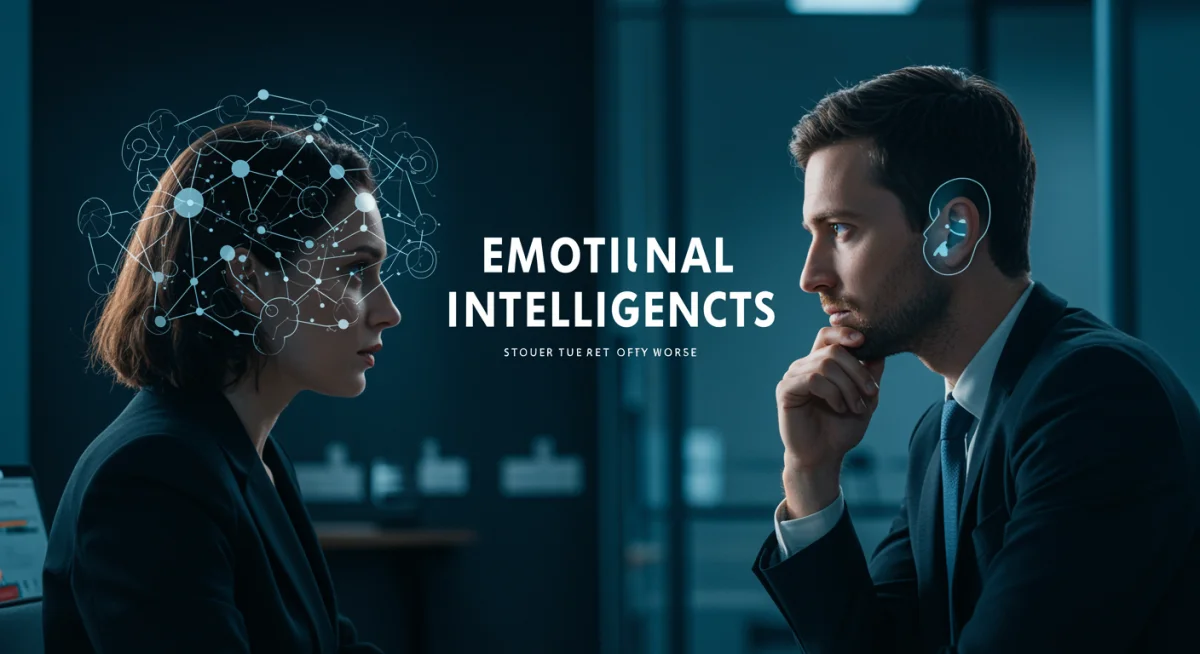
Building Stronger Teams Through Empathy
Empathy, a key component of emotional intelligence, allows tech professionals to understand the perspectives of their colleagues, clients, and end-users. This understanding is vital for developing user-centric products and for fostering a supportive team dynamic. When team members understand each other’s motivations and challenges, collaboration becomes more fluid and effective.
- Improved User Experience: Empathy helps developers understand user needs and pain points.
- Effective Conflict Resolution: Understanding underlying emotions can de-escalate workplace disagreements.
- Enhanced Leadership: Leaders with high EQ can motivate and inspire their teams more effectively.
Self-awareness, another facet of EQ, helps individuals understand their own strengths, weaknesses, and emotional triggers. This allows for better self-regulation and more thoughtful responses in challenging situations. For instance, a developer aware of their frustration triggers can employ strategies to manage their reactions, preventing potential team friction.
Ultimately, emotional intelligence empowers tech professionals to not only excel in their technical tasks but also to contribute meaningfully to the human side of technology. It’s about creating an environment where everyone feels understood, valued, and motivated to perform their best. This makes EQ an indispensable asset for any tech company aiming for sustained success.
Complex Problem-Solving: Beyond the Algorithm
The modern tech landscape is riddled with problems that defy simple algorithmic solutions. Therefore, complex problem-solving is an essential soft skill that tech employers in the US are prioritizing for 2026 hires. This isn’t merely about debugging code or optimizing a database; it involves the ability to dissect multifaceted issues, synthesize disparate information, think creatively, and devise innovative solutions that consider a wide array of variables—technical, business, and human.
Employers need individuals who can approach unstructured problems with a systematic yet imaginative mindset. This often means identifying root causes that are not immediately obvious, exploring unconventional solutions, and understanding the downstream impacts of their decisions. The best tech professionals are those who can not only identify problems but also conceptualize and implement groundbreaking solutions.
Analytical Thinking and Creative Solutions
Complex problem-solving relies heavily on both analytical rigor and creative thinking. Analytical skills help break down a problem into manageable components, while creativity enables the generation of novel approaches when traditional methods fall short. These two facets work in tandem to tackle the most daunting challenges.
- Deconstructing Large Problems: Breaking down complex issues into smaller, solvable parts.
- Innovative Solution Generation: Thinking outside the box to find unique answers.
- Impact Assessment: Evaluating potential solutions based on various criteria and consequences.
Furthermore, complex problem-solving often requires a strong understanding of systems thinking. This means seeing how different components of a system interact and how changes in one area can affect others. For example, a developer solving a performance issue might need to consider not just the code, but also network latency, database queries, and even user behavior patterns. This holistic perspective is invaluable in preventing unforeseen complications.
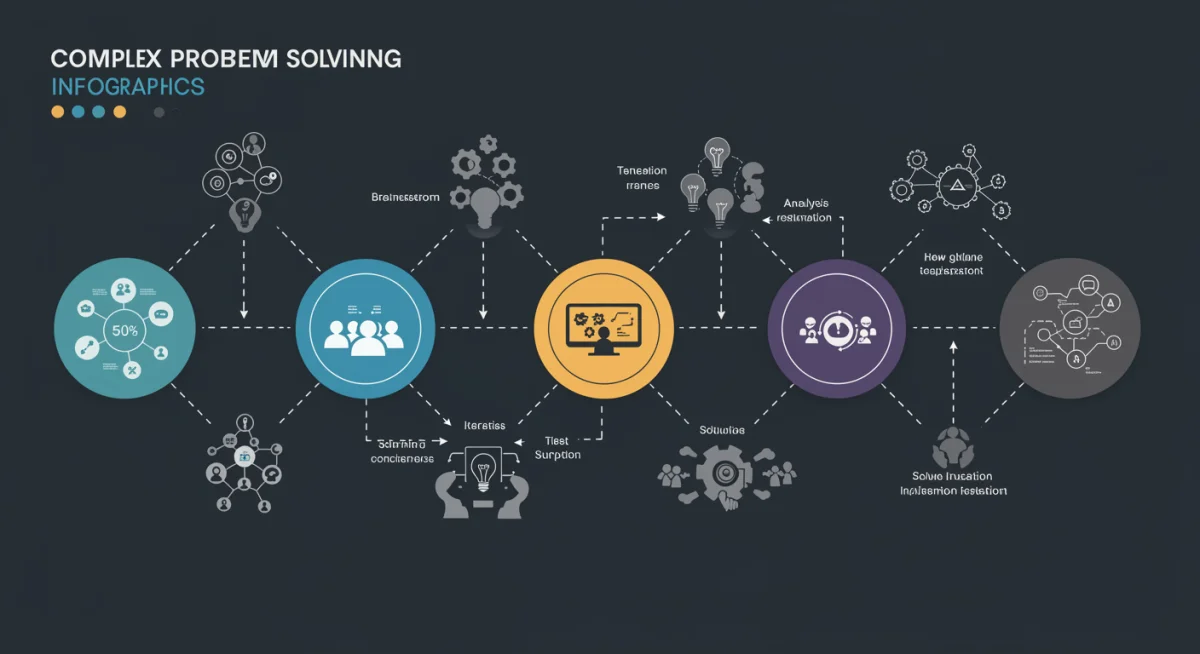
In essence, complex problem-solving is about intellectual agility and the courage to tackle the unknown. It’s about asking the right questions, challenging assumptions, and relentlessly pursuing effective and sustainable solutions. This skill set is crucial for driving innovation and maintaining a competitive edge in the fast-paced tech industry.
Cross-Functional Communication: Bridging Divides
In today’s interconnected tech organizations, silos are the enemy of progress. Consequently, cross-functional communication has emerged as a paramount soft skill that tech employers in the US are actively seeking for 2026 hires. This skill involves the ability to effectively articulate ideas, requirements, and feedback across different departments, teams, and even with non-technical stakeholders. It’s about ensuring that everyone, from engineers and designers to marketing and sales teams, is on the same page, working towards a unified objective.
Poor communication can lead to misunderstandings, duplicated efforts, missed deadlines, and ultimately, failed projects. Tech professionals who can translate highly technical concepts into understandable language for diverse audiences, and vice versa, are invaluable. They act as bridges, ensuring seamless information flow and fostering a collaborative environment where different perspectives are not only heard but also integrated.
Clarity, Conciseness, and Active Listening
Effective cross-functional communication isn’t just about speaking; it’s equally about listening. Active listening allows individuals to fully grasp the needs and concerns of others, leading to more relevant and impactful contributions. Clarity and conciseness, meanwhile, ensure that messages are understood without ambiguity, saving time and preventing errors.
- Translating Technical Jargon: Simplifying complex terms for non-technical audiences.
- Active Listening: Understanding diverse perspectives and underlying needs.
- Constructive Feedback: Delivering and receiving feedback effectively to improve collaboration.
Moreover, this skill extends to choosing the appropriate communication channel and style for different situations. Whether it’s a detailed technical specification, a high-level project update for executives, or a brainstorming session with designers, the ability to tailor one’s communication approach is crucial. It also involves managing expectations and proactively addressing potential misalignments before they escalate into significant issues.
Ultimately, cross-functional communication is the glue that holds complex tech projects together. It ensures that innovative ideas are not lost in translation and that diverse talents converge harmoniously to deliver successful outcomes. For 2026, tech professionals who master this art will be indispensable assets to any organization.
Cultivating Your Soft Skills for Future Tech Success
Understanding the importance of these soft skills is the first step; actively cultivating them is the next. For aspiring and current tech professionals in the US looking toward 2026, a proactive approach to developing adaptability, emotional intelligence, complex problem-solving, and cross-functional communication is essential. This journey involves self-reflection, seeking feedback, and deliberately engaging in activities that challenge and refine these abilities. It’s not about overnight transformation but consistent effort and a growth mindset.
Many individuals tend to focus solely on technical certifications or learning new coding languages, inadvertently neglecting the human aspects of their professional development. However, the most successful careers in tech are often built on a robust foundation of both hard and soft skills. Investing time and energy in these interpersonal and cognitive abilities will not only make you a more attractive candidate but also a more effective and fulfilled professional.
Practical Strategies for Skill Development
There are numerous ways to enhance your soft skills, often integrated into daily work and personal interactions. It requires intentional practice and a willingness to step outside your comfort zone. Consider the following approaches:
- Seek Diverse Project Roles: Volunteer for projects that require collaboration with different departments.
- Practice Active Listening: Focus intently on understanding others’ perspectives during meetings and conversations.
- Engage in Mentorship: Both as a mentor and a mentee, you can develop empathy and communication.
- Participate in Workshops: Look for training focused on leadership, negotiation, or conflict resolution.
Additionally, self-assessment tools and 360-degree feedback can provide valuable insights into your current soft skill proficiency and areas for improvement. Asking colleagues or supervisors for honest feedback on your communication style or adaptability can be incredibly illuminating. The key is to be open to constructive criticism and committed to continuous self-improvement.
Ultimately, cultivating these soft skills is an ongoing process that will differentiate you in a competitive job market. By consciously working on these areas, tech professionals can not only meet but exceed the expectations of US employers in 2026, ensuring a long and impactful career.
| Key Skill | Brief Description |
|---|---|
| Adaptability | Ability to adjust to new technologies, methodologies, and project changes quickly. |
| Emotional Intelligence | Understanding and managing emotions for effective communication and collaboration. |
| Complex Problem-Solving | Dissecting intricate issues, synthesizing information, and devising innovative solutions. |
| Cross-Functional Communication | Articulating ideas clearly across diverse teams and stakeholders for unified goals. |
Frequently Asked Questions About Tech Soft Skills
While technical skills are foundational, automation handles many routine tasks. Soft skills like problem-solving and communication are critical for complex, human-centric challenges, innovation, and effective teamwork, which machines cannot replicate. They ensure projects are successful and teams are cohesive.
To improve adaptability, tech professionals should embrace continuous learning, seek diverse project experiences, stay updated with industry trends, and practice resilience when facing unexpected changes or challenges. Cultivating a growth mindset is key to navigating rapid technological shifts effectively.
In tech, emotional intelligence involves understanding user needs (empathy), handling feedback constructively, managing stress, resolving team conflicts, and communicating effectively with diverse colleagues. It helps build stronger teams and create user-centric products by fostering a positive work environment.
Cross-functional communication ensures all departments, from engineering to marketing, are aligned on project goals. It prevents misunderstandings, reduces rework, and fosters a collaborative environment. Tech professionals must translate technical concepts clearly to diverse audiences for unified project execution.
No, these soft skills are crucial at all career levels in tech. While they become more pronounced in leadership, even entry-level professionals benefit from strong adaptability, emotional intelligence, problem-solving, and communication to grow, collaborate effectively, and contribute meaningfully to their teams.
Conclusion
As the US tech industry hurtles towards 2026, the emphasis on a well-rounded professional profile has never been clearer. While coding expertise and technical acumen remain foundational, the ability to seamlessly integrate these with essential soft skills—adaptability, emotional intelligence, complex problem-solving, and cross-functional communication—will define the most sought-after talent. Employers are increasingly recognizing that true innovation and sustainable success stem from teams that are not only technically brilliant but also highly collaborative, resilient, and empathetically driven. For those aspiring to thrive in this dynamic sector, a deliberate investment in cultivating these human-centric abilities is not just an advantage; it is a necessity for a future Beyond the Code: 4 Essential Soft Skills Tech Employers in the U.S. Value Most for 2026 Hires.