Smart Home Connectivity 2026: Mesh Wi-Fi for 20+ Devices
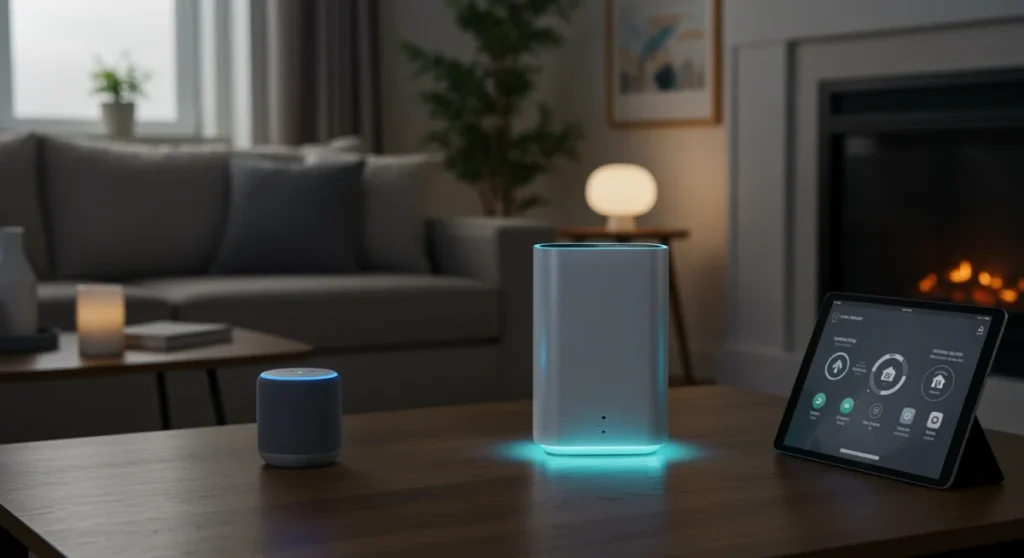
Achieving seamless smart home connectivity in 2026 for 20+ devices in US homes necessitates a robust mesh Wi-Fi system, offering extended coverage, high bandwidth, and advanced security features to handle increasing demands.
As we approach 2026, the landscape of home technology continues to evolve at an unprecedented pace, making smart home mesh Wi-Fi systems essential for seamless connectivity. The sheer number of connected devices in the average US household is rapidly expanding, demanding a network infrastructure that can keep pace with these growing needs. This article explores how to choose the right mesh Wi-Fi system to support 20+ devices effortlessly in your US home.
The Evolution of Smart Home Connectivity Needs
The modern US home is no longer just a place to live; it’s a dynamic ecosystem of interconnected devices, each vying for bandwidth and a stable connection. From smart thermostats and lighting systems to security cameras, voice assistants, and an array of entertainment devices, the demands on our home networks have skyrocketed. Understanding this evolution is crucial for making informed decisions about your network infrastructure.
In 2026, it’s not uncommon for a single household to manage 20, 30, or even more connected gadgets. Each device, whether streaming 4K video, uploading security footage, or simply checking for updates, consumes valuable network resources. Traditional single-router setups often buckle under this pressure, leading to frustrating dead zones, dropped connections, and overall sluggish performance. This is where the paradigm shift towards more robust solutions like mesh Wi-Fi becomes not just an advantage, but a necessity.
The Proliferation of Smart Devices
The growth isn’t just in quantity but also in the sophistication and bandwidth requirements of these devices. High-definition security cameras, augmented reality applications, and even smart appliances with advanced computational needs all contribute to a complex network environment. Ensuring each device operates optimally requires a network that can intelligently manage traffic and provide consistent coverage.
- Smart TVs and streaming devices: Consuming significant bandwidth for 4K/8K content.
- Home security systems: Requiring constant, reliable connections for real-time monitoring.
- Voice assistants and smart speakers: Needing low-latency connections for instant responses.
- Smart appliances: From refrigerators to washing machines, integrating into the network for remote control and diagnostics.
The evolution of smart home connectivity is a testament to technological progress, but it also presents a challenge: how do we ensure every device gets the reliable connection it needs without compromising overall network performance? The answer lies in understanding the limitations of older systems and embracing the capabilities of modern mesh Wi-Fi.
Understanding Mesh Wi-Fi Systems
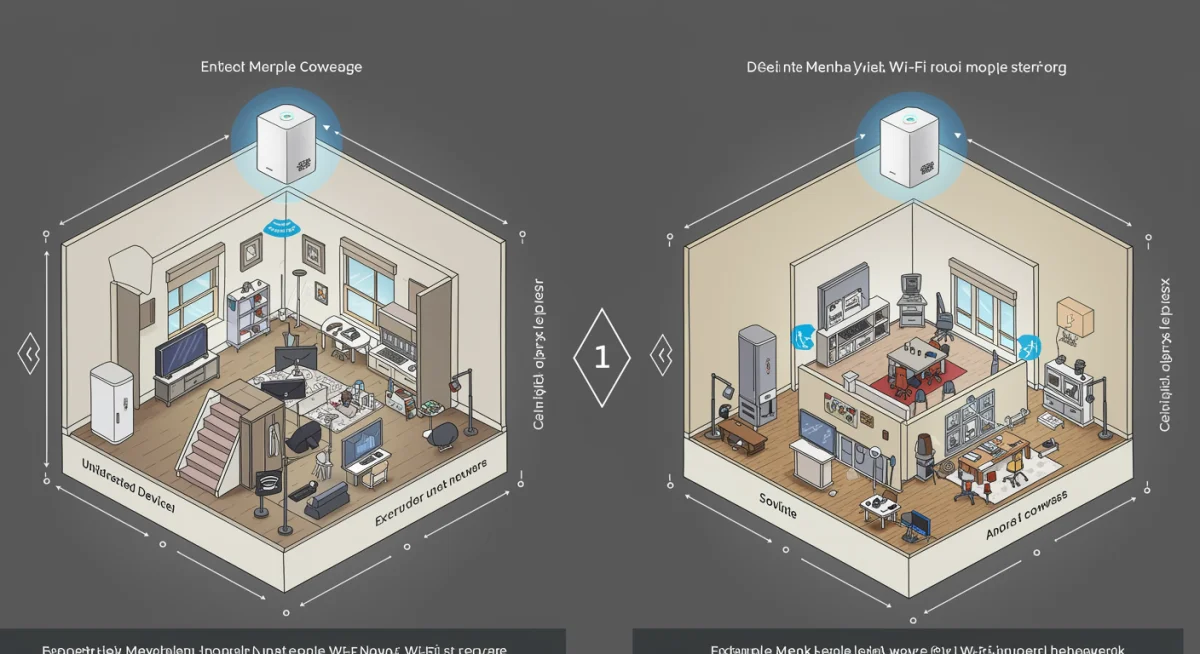
Mesh Wi-Fi systems represent a significant leap forward from traditional routers, offering a scalable and highly efficient solution for whole-home coverage. Unlike a single router that broadcasts Wi-Fi from one central point, a mesh system uses multiple interconnected nodes to create a unified, expansive network. This distributed approach is ideal for large homes, multi-story residences, or any environment where dead zones are a persistent issue.
Each node in a mesh system communicates with the others, forming a cohesive network that intelligently routes traffic and ensures optimal signal strength wherever you are. This means you can move freely throughout your home without experiencing drops in connectivity or needing to manually switch between different network names. The system works seamlessly in the background, providing a consistent and powerful Wi-Fi experience for all your devices.
How Mesh Wi-Fi Differs from Traditional Routers
The primary distinction lies in how coverage is provided. A traditional router acts as a single access point, often struggling to penetrate walls or reach distant corners of a home effectively. Range extenders or Wi-Fi boosters can help, but they typically create separate networks, leading to a less seamless experience and often sacrificing speed. Mesh systems, conversely, create a single, unified network.
- Unified Network: All nodes share one network name (SSID), eliminating the need to switch connections.
- Intelligent Routing: Devices automatically connect to the strongest available signal from the nearest node.
- Scalability: Easily add more nodes as your home or connectivity needs expand.
- Elimination of Dead Zones: Provides consistent coverage across the entire living space.
Understanding these fundamental differences is key to appreciating why mesh Wi-Fi is rapidly becoming the gold standard for modern smart homes. It addresses the inherent limitations of older technology, providing a robust foundation for the ever-growing number of connected devices.
Key Features to Look for in 2026 Mesh Wi-Fi Systems
When selecting a mesh Wi-Fi system in 2026, several key features stand out as critical for supporting 20+ smart devices seamlessly. Beyond basic coverage, you’ll want to consider the underlying technology, capacity, and management capabilities to ensure your network is future-proof and performs optimally.
The rapid advancements in wireless technology mean that what was cutting-edge a few years ago might be insufficient for today’s demands. Focusing on these specific features will help you navigate the market and choose a system that truly meets the needs of a sophisticated smart home.
Wi-Fi 6E and Wi-Fi 7 Adoption
The most significant technological advancements come with the latest Wi-Fi standards. Wi-Fi 6E introduces the 6 GHz band, offering dedicated, uncongested airwaves for compatible devices, resulting in ultra-fast speeds and extremely low latency. This is particularly beneficial for high-bandwidth applications like 8K streaming, VR/AR, and online gaming, as well as providing a cleaner channel for critical smart home devices.
Wi-Fi 7 (802.11be), also known as Wi-Fi Ultra-High Reliability (UHR), is the next frontier. While still emerging, systems boasting Wi-Fi 7 capabilities will offer even greater speeds, lower latency, and enhanced capacity through features like Multi-Link Operation (MLO) and wider channels (up to 320 MHz). Investing in a Wi-Fi 7-ready system now will ensure your network remains cutting-edge for years to come.
- 6 GHz Band: Exclusive, interference-free spectrum for Wi-Fi 6E and 7 devices.
- Higher Throughput: Dramatically increased speeds for data-intensive tasks.
- Lower Latency: Essential for real-time applications and responsive smart home control.
- Improved Network Efficiency: Better handling of multiple simultaneous connections.
Backhaul Technology and Capacity
The backhaul is the dedicated connection between the mesh nodes. A strong backhaul is paramount for maintaining high speeds across your entire network. Look for systems with a dedicated backhaul band (triband or quad-band systems), ideally utilizing the 6 GHz band or a wired Ethernet connection between nodes. This prevents congestion and ensures that client devices don’t have to share bandwidth with the inter-node communication.
Capacity, often measured by the number of simultaneous streams and processor power, dictates how many devices the system can efficiently handle. For 20+ devices, a system with at least 8-12 streams and a powerful multi-core processor is advisable. This ensures that even during peak usage, your smart home remains responsive and fast.
Installation and Management Considerations
Even the most powerful mesh Wi-Fi system is only as good as its setup and ongoing management. In 2026, manufacturers are increasingly focusing on user-friendly installation processes and intuitive control interfaces. This means that even if you’re not a networking expert, you should be able to get your system up and running with minimal hassle and manage it effectively.
A well-designed system will offer a streamlined experience from unboxing to daily operation, ensuring that your smart home connectivity is robust and reliable without requiring constant technical intervention. These considerations can significantly impact your overall satisfaction with the system.
Effortless Setup and User-Friendly Apps
Most modern mesh Wi-Fi systems are designed for easy, app-guided setup. This typically involves downloading a mobile app, plugging in the main router, and then adding satellite nodes one by one. The app should walk you through each step, often using visual cues and clear instructions. Look for apps that provide:
- Intuitive Onboarding: Simple, step-by-step instructions for initial setup.
- Network Monitoring: Real-time insights into connected devices, network usage, and signal strength.
- Guest Network Management: Easy creation and management of separate networks for visitors.
- Parental Controls: Tools to filter content, set time limits, and pause internet access for specific devices.
The ease of management extends beyond initial setup. The ability to quickly troubleshoot issues, prioritize device traffic, and update firmware through a user-friendly app is invaluable for maintaining a high-performing smart home network.
Advanced Security Features
With an increasing number of smart devices, the attack surface for cyber threats also expands. Robust security features are non-negotiable. Look for mesh systems that offer:
- WPA3 Encryption: The latest and most secure Wi-Fi encryption standard.
- Built-in Antivirus/Anti-Malware: Protecting all connected devices from known threats.
- Intrusion Prevention Systems (IPS): Detecting and blocking suspicious network activity.
- Automatic Firmware Updates: Ensuring your system always has the latest security patches.
- VPN Support: For enhanced privacy and secure remote access.
A comprehensive security suite provides peace of mind, knowing that your smart home and personal data are protected from evolving cyber threats. This proactive approach to security is essential in 2026.
Optimizing Performance for 20+ Devices
Even with a top-tier mesh Wi-Fi system, optimization is key to ensuring seamless performance for 20+ devices. This involves strategic placement of nodes, understanding device priorities, and regularly monitoring network health. A well-optimized network can make a significant difference in the responsiveness and reliability of your smart home.
It’s not enough to simply install the hardware; ongoing attention to network settings and device behavior can unlock the full potential of your mesh system. This proactive approach ensures that your smart home remains a haven of convenience, not a source of frustration.
Strategic Node Placement
The placement of your mesh nodes is critical for maximizing coverage and performance. The main router should be centrally located, ideally in an open area, free from obstructions. Satellite nodes should be strategically placed to cover dead zones, ensuring there’s always overlap between nodes for a strong backhaul connection.
Avoid placing nodes near large metal objects, thick walls, or appliances that emit electromagnetic interference (e.g., microwaves, cordless phones). Experiment with placement to find the optimal configuration that provides robust signal strength throughout your entire home. Many mesh apps include tools to help you identify the best locations for your nodes.

Quality of Service (QoS) and Device Prioritization
For homes with many devices, not all traffic is created equal. Quality of Service (QoS) settings allow you to prioritize certain devices or applications, ensuring that critical tasks receive the necessary bandwidth. For example, you might prioritize your work laptop during video calls, or a smart TV during 4K streaming, over less time-sensitive devices.
Many mesh systems offer intuitive QoS controls through their mobile apps, allowing you to easily drag and drop devices into priority tiers or apply pre-set profiles for gaming, streaming, or video conferencing. This intelligent management of bandwidth ensures that your most important activities are never hampered by network congestion.
Top Mesh Wi-Fi Systems for 2026 in the US Market
As we look to 2026, the US market offers a variety of advanced mesh Wi-Fi systems capable of handling the demands of 20+ smart devices. These systems combine cutting-edge technology with user-friendly interfaces, robust security, and scalable designs. While specific models may evolve, certain brands consistently deliver high-performance solutions.
Choosing the right system involves balancing features, price, and the specific needs of your home. Always consider the size of your home, the number of devices, and your internet service provider’s speed when making a selection.
Leading Brands and Their Offerings
Several manufacturers have established themselves as leaders in the mesh Wi-Fi space, consistently innovating to meet the demands of smart homes. When evaluating options, consider:
- Eero (by Amazon): Known for its simplicity, compact design, and robust security features via Eero Secure subscriptions. Eero Pro 6E and future iterations are excellent choices for widespread coverage and performance.
- Netgear Orbi: Often lauded for its powerful performance and dedicated backhaul, making it ideal for larger homes and very high bandwidth needs. The Orbi 9 Series, with Wi-Fi 6E/7, provides exceptional speed and capacity.
- TP-Link Deco: Offers a wide range of models at various price points, often providing great value. Deco XE75 or XE200 (Wi-Fi 6E) are strong contenders for balancing performance and affordability.
- Google Nest Wifi Pro: Integrates seamlessly with the Google ecosystem, offering easy setup and smart home controls. The Nest Wifi Pro (Wi-Fi 6E) provides solid performance for medium to large homes.
Each brand has its unique strengths, so researching individual models and reading reviews specific to your home’s size and device count is highly recommended. Consider factors like the number of nodes included, the possibility of adding more, and the subscription costs for advanced security or parental control features.
Future-Proofing Your Investment
Investing in a mesh Wi-Fi system in 2026 should be seen as a long-term decision. Prioritize systems that support the latest Wi-Fi standards (Wi-Fi 6E, Wi-Fi 7) to ensure compatibility with future devices and technologies. Look for systems that are easily expandable, allowing you to add more nodes as your smart home grows.
Consider the manufacturer’s commitment to firmware updates and ongoing support. A system that receives regular security patches and performance enhancements will remain reliable and secure for years to come, protecting your investment and ensuring a consistently smooth smart home experience.
Challenges and Troubleshooting Common Issues
Even the most advanced mesh Wi-Fi systems can encounter challenges. Understanding common issues and how to troubleshoot them can save you significant frustration and ensure your smart home connectivity remains robust. Proactive problem-solving is an essential skill for any smart home enthusiast.
While mesh systems are designed for reliability, external factors or specific device behaviors can sometimes lead to performance hiccups. Being prepared for these eventualities allows you to quickly restore optimal network functionality.
Addressing Dead Zones and Intermittent Connectivity
Despite the promise of whole-home coverage, dead zones can still occur if nodes are improperly placed or if there are significant structural impediments. If you experience dead zones, revisit your node placement. Use the signal strength indicators in your mesh system’s app to identify weak spots and reposition nodes accordingly.
Intermittent connectivity can often be traced to interference from other devices (e.g., microwaves, baby monitors) or neighboring Wi-Fi networks. Try changing Wi-Fi channels if your system allows it, or ensure your mesh system is utilizing the less congested 6 GHz band if available. Resetting nodes and your main router can also resolve temporary glitches.
- Reposition Nodes: Optimize placement for better signal overlap and less obstruction.
- Check for Interference: Identify and mitigate sources of electromagnetic interference.
- Update Firmware: Ensure all nodes are running the latest software for stability and performance.
- Perform Network Resets: A simple reboot can often clear minor network issues.
Overcoming Device Compatibility and Bandwidth Saturation
Not all smart devices are created equal when it comes to Wi-Fi compatibility. Older devices might only support 2.4 GHz, which can be slower and more susceptible to interference. Ensure your mesh system offers strong dual-band or triband capabilities to accommodate a mix of device types. For new devices, prioritize those that support Wi-Fi 6E or Wi-Fi 7 to leverage the faster bands.
Bandwidth saturation occurs when too many high-demand devices are active simultaneously. Utilize QoS settings to prioritize critical devices. If saturation is a consistent issue, consider upgrading your internet service plan or adding more mesh nodes to distribute the load more effectively. Regular monitoring of your network’s health through your mesh app can help you identify and address these issues before they become major problems.
By understanding and addressing these common challenges, you can ensure your smart home mesh Wi-Fi system provides the seamless, reliable connectivity your 20+ devices need in 2026.
| Key Feature | Benefit for Smart Homes (2026) |
|---|---|
| Wi-Fi 6E / Wi-Fi 7 | Provides access to the uncongested 6 GHz band, delivering ultra-fast speeds and low latency for future-proof connectivity. |
| Dedicated Backhaul | Ensures reliable, high-speed communication between mesh nodes, preventing bottlenecks and maintaining performance. |
| Advanced Security | Protects all connected smart devices with WPA3 encryption, built-in antivirus, and automatic security updates. |
| QoS & Prioritization | Allows users to prioritize bandwidth for critical devices or applications, ensuring smooth operation under heavy load. |
Frequently Asked Questions About Smart Home Mesh Wi-Fi
Mesh Wi-Fi is crucial because traditional routers struggle with the sheer number of connected devices (20+) and the extensive coverage needed in modern US homes. A mesh system ensures consistent, strong signals across all areas, eliminating dead zones and supporting high bandwidth demands from smart devices.
Wi-Fi 6E introduces the 6 GHz band for faster, less congested connections. Wi-Fi 7 builds upon this with even higher speeds, lower latency, and enhanced capacity through features like Multi-Link Operation (MLO) and wider channels (up to 320 MHz), making it ideal for future ultra-high-reliability applications.
The number of nodes depends on your home’s size and layout. Generally, a two-node system is suitable for up to 3,000 sq ft, while larger or multi-story homes may require three or more. Walls and obstructions also play a role. Most systems allow you to easily add nodes as needed.
Yes, indirectly. A strong, stable mesh Wi-Fi signal means devices don’t have to constantly search for a connection or work harder to maintain it. This reduced effort can lead to better power efficiency and extended battery life for battery-powered smart home gadgets.
Modern mesh Wi-Fi systems include robust security features like WPA3 encryption, built-in antivirus, intrusion prevention systems, and automatic firmware updates. These layers of security are essential for protecting your growing number of smart devices and personal data from cyber threats in 2026.
Conclusion
The journey to achieving truly seamless smart home mesh Wi-Fi connectivity in 2026 for 20+ devices in your US home culminates in a strategic investment in a robust mesh Wi-Fi system. As our living spaces become increasingly automated and interconnected, the demands on our home networks will only continue to escalate. By prioritizing systems that embrace Wi-Fi 6E or Wi-Fi 7, offer dedicated backhaul, and provide comprehensive security features, you are not just buying a router; you are investing in the future-proof foundation of your smart home ecosystem. The right mesh system will eliminate frustrating dead zones, deliver consistent high-speed performance, and ensure every connected gadget operates flawlessly, transforming your home into a truly intelligent and efficient environment ready for whatever innovations the future holds.